Ctrl K
1611–1693
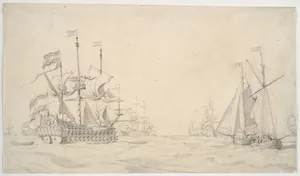
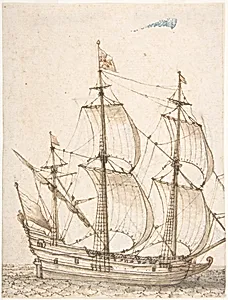
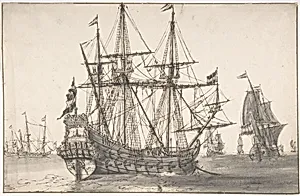
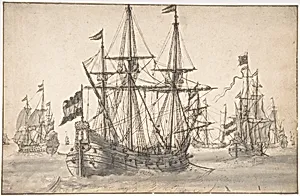
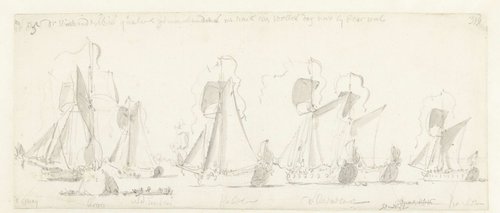
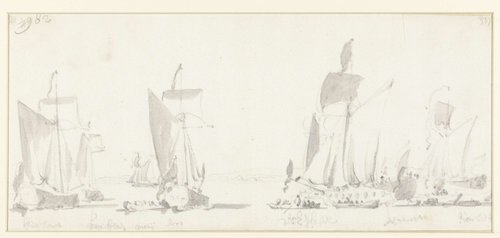
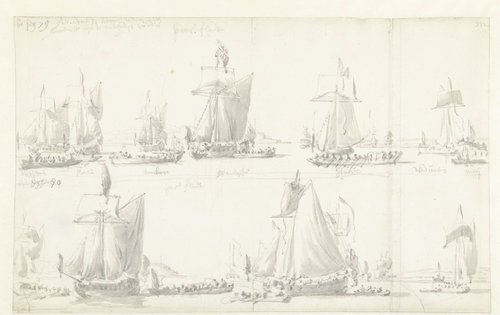
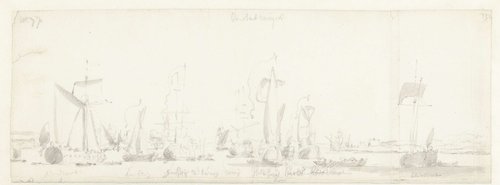
**Willem van de Velde the Elder (1610/11–1693)** was a pioneering Dutch Golden Age marine artist renowned for his meticulous drawings and pen paintings of ships and naval engagements. Born in Leiden to a Flemish skipper, he grew up immersed in maritime life, joining his father at sea from an early age. He married Judith Adriaens van Leeuwen in 1631, and their children included Magdalena, the marine painter Willem van de Velde the Younger (born 1633), and the landscape painter Adriaen van de Velde (baptized 1636). Largely self-taught as a draughtsman, he established himself by the 1640s as a “ship’s draughtsman,” often sailing with Dutch fleets to capture events firsthand.
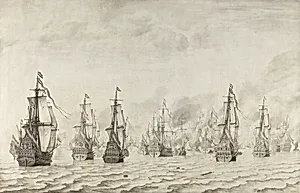
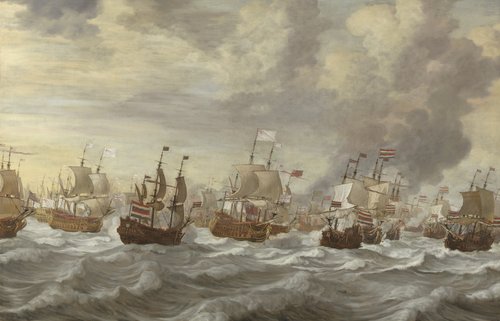
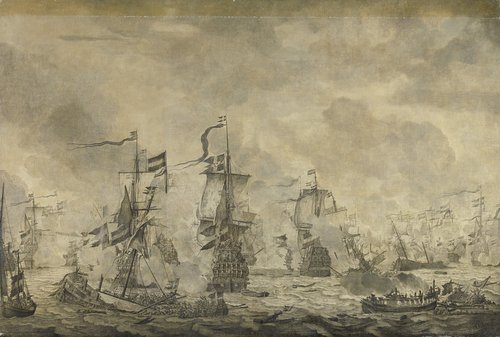
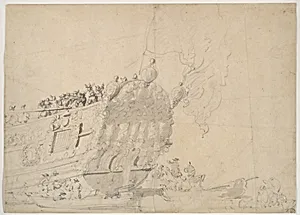
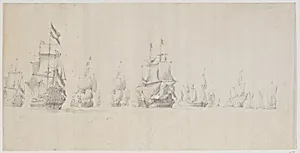
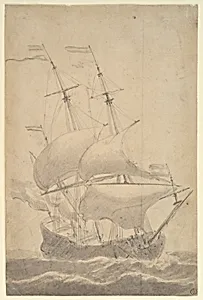
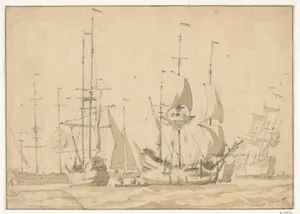
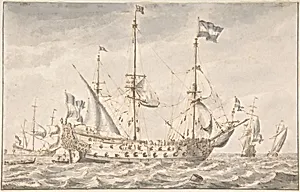
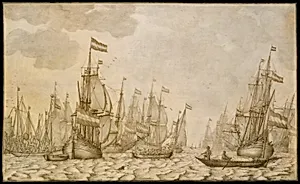
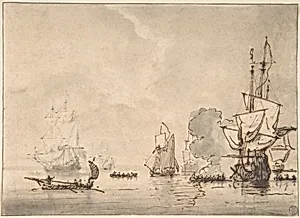
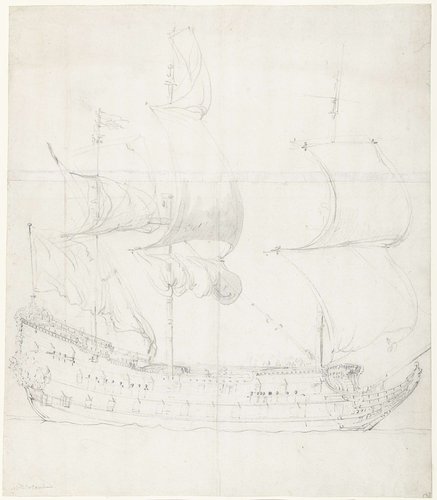
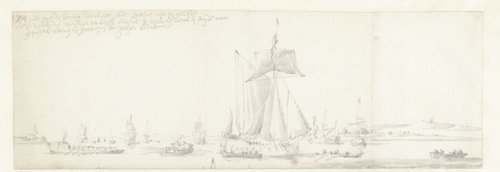
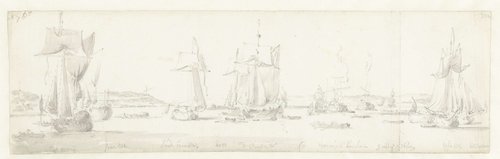
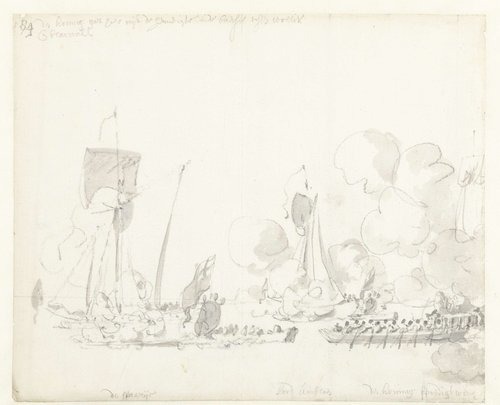
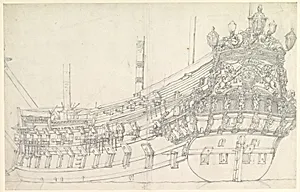
Van de Velde specialized in precise graphite and ink drawings of vessels, which he developed into highly detailed monochrome “pen paintings” back in the studio. These works, created for wealthy patrons, combined documentary accuracy with artistic refinement. He served as an official artist to the Dutch fleet, sketching major actions such as the Four Days’ Battle and St James’s Day Battle in 1666. One notable example is his intricate pen painting of the Battle of Scheveningen (1653), in which he even included a self-portrait sketching from a small boat amid the action. Though primarily a draughtsman, he later adopted oil painting techniques similar to those of his son.
In late 1672 or early 1673, amid the Third Anglo-Dutch War, van de Velde and his son relocated to England. King Charles II granted them annual salaries and a studio in the Queen’s House at Greenwich, where they produced works for the royal court and British patrons. Van de Velde the Elder continued his detailed marine draughtsmanship while collaborating closely with his son, whose oil paintings complemented the father’s monochrome expertise. He lived in Greenwich and later Sackville Street, London, until his death in 1693; he was buried in St James’s Church, Piccadilly.
Together with his son, van de Velde the Elder became one of the most influential maritime artists of the seventeenth century. Their combined output—drawings, pen paintings, and oils—helped establish marine painting as a respected genre in Britain and inspired later generations, including J.M.W. Turner. Their extensive body of work, including nearly 1,500 drawings preserved at the National Maritime Museum, remains a cornerstone of naval art history and continues to shape our visual understanding of the Age of Sail.