Ctrl K

1792–1864
William Guy Wall, born in Dublin, Ireland, in 1792, arrived in New York in 1812 already well-trained as an artist, having honed his skills back home before emigrating. Little is documented about his formal instruction in Ireland, but his proficiency in watercolor positioned him immediately among the city's burgeoning artistic scene. Wall resided in America from 1812 to 1835 and again from 1856 to 1860, during which time he became a founding member of the National Academy of Design, exhibiting 59 paintings there over 25 years, alongside showings at the Pennsylvania Academy of the Fine Arts and the Apollo Association.
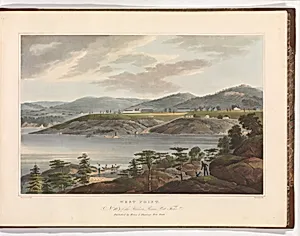
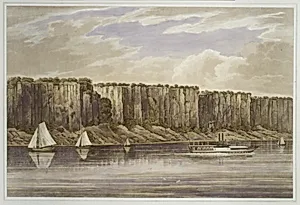
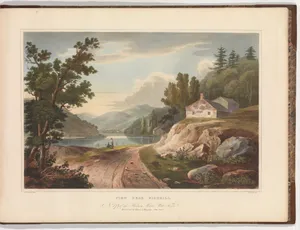
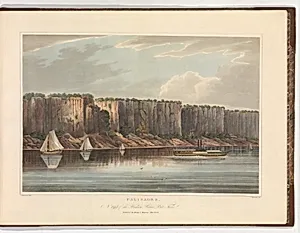
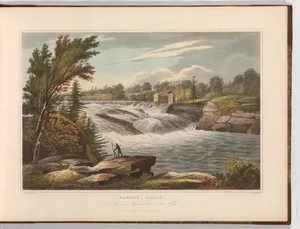
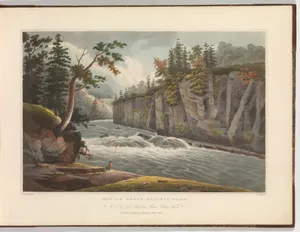
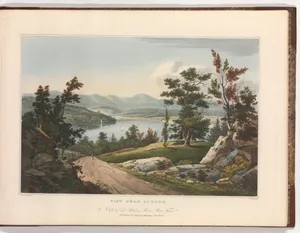
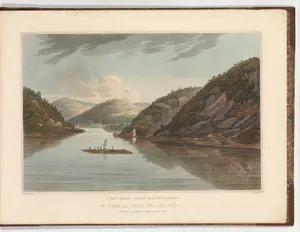
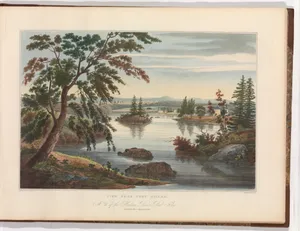
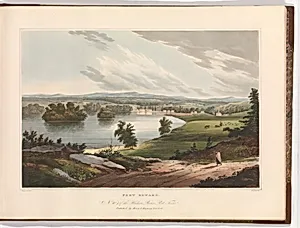
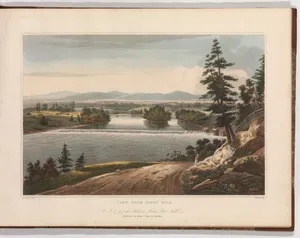
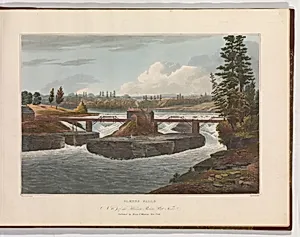
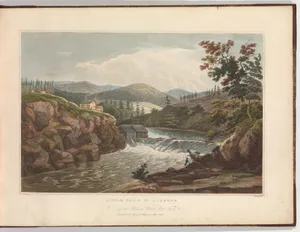
Wall's breakthrough came with his masterful watercolor series documenting the Hudson River Valley, culminating in *The Hudson River Portfolio* (1821–1825), a groundbreaking publication of 20 engraved views translated from his originals by John Hill and his son John William Hill. This work, the first to vividly capture the sublimity of American scenery for a wide audience, included iconic scenes like *View near Fishkill*, *West Point*, and *Glens Falls*. Among his oil paintings, *Cauterskill Falls on the Catskill Mountains* (1826–27) exemplifies his command of dramatic natural vistas, while later pieces such as *Catskill Mountain House* (ca. 1862) reflect his enduring fascination with the region. His paintings commanded high prices—up to $400—and at least two were reproduced in *The Atlantic Souvenir* in the late 1820s.
As a forerunner of the Hudson River School, Wall's style emphasized straightforward, unromanticized depictions of America's awe-inspiring landscapes, blending Irish precision with a fresh appreciation for New World wilderness. He influenced the movement's focus on national identity through nature, paving the way for luminaries like Thomas Cole. Wall fathered a son, William Archibald Wall (1828–1878), who followed in his footsteps as a landscape painter. Returning to Dublin around 1860, he died there in 1864, leaving a legacy preserved in collections such as the Metropolitan Museum of Art, New-York Historical Society, and Amon Carter Museum. Wall's portfolios not only popularized the Hudson but immortalized a pivotal era in American art, inviting viewers to marvel at the continent's untamed beauty.
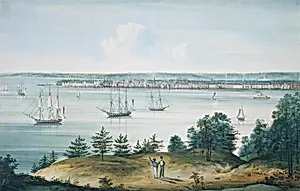
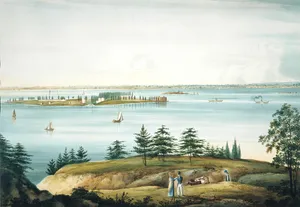

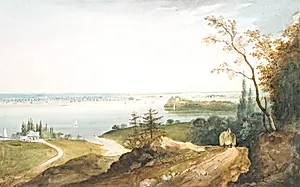
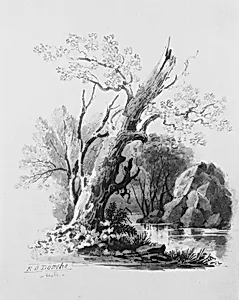
![New York from Heights Near Brooklyn [The Wall View from Brooklyn]](https://images.artheonmuseum.org/met/dp/thumb/new-york-from-heights-near-brooklyn-the-wall-view-from-brooklyn-388002.webp)
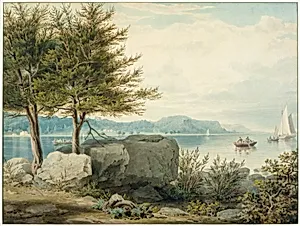
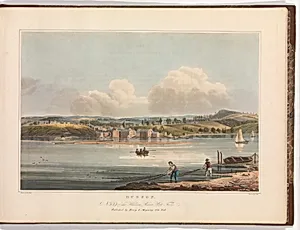
![Newburg [Newburgh] (No. 14 of The Hudson River Portfolio)](https://images.artheonmuseum.org/met/dp/thumb/newburg-newburgh-no-14-of-the-hudson-river-portfolio-418423.webp)