Ctrl K
1824–1896
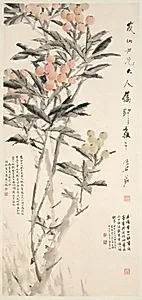
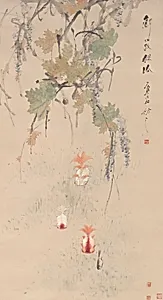
Xugu (1824–1896) was one of the most celebrated Chinese painters of the late Qing dynasty, renowned for his lyrical, highly individualistic approach to flower and plant painting that set him apart from both the orthodox academic tradition and the more popular Shanghai commercial style. Born Zhu Huairen in Anhui province, he took monastic vows and became a Buddhist monk, adopting the religious name Xugu — meaning roughly 'emptiness of the ancient' — an identity that shaped both his life and his art. He spent much of his career in and around Yangzhou and Shanghai, the latter being the bustling commercial and cultural center where he developed his distinctive mature style.
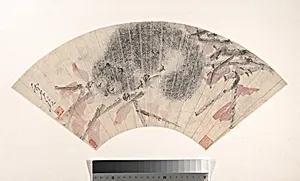
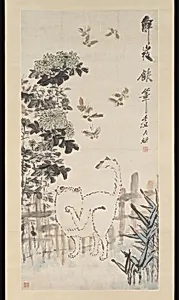
Xugu's training drew on the deep well of Chinese literati painting, but he transformed inherited conventions into something arrestingly personal. His compositions of lotus flowers, wisteria, squirrels, goldfish, and pine branches are characterized by a free, almost eccentric brushwork, a restrained and unconventional palette, and a sense of quiet humor and tender observation. He favored a particular wet, loose ink technique that gave his plants and animals a trembling vitality. His goldfish, in particular — painted in shimmering loops and curves — became iconic images in the history of Chinese art.
Unlike many of his contemporaries who worked within the demands of the Shanghai art market, Xugu maintained a degree of artistic independence rooted in his monastic identity. He sold works to support himself but resisted purely commercial pressures, and his refusal to compromise his vision earned him the respect of fellow artists and connoisseurs alike.
Xugu's influence on twentieth-century Chinese painting has been profound. Artists such as Qi Baishi acknowledged the impact of his approach to flora and fauna. His works are treasured in major collections in China, Taiwan, and internationally, where they continue to be recognized as masterpieces of the late traditional style.