
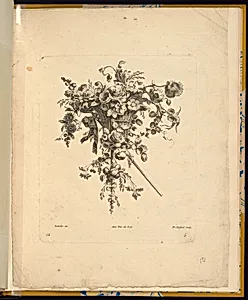
2me. SUITTE DE CULS DE LAMPES ET FLEURONS. Inventés et Dessinés Par Mr. Bachelier, P.tre du Roy, Tirée de la grande Edition in-f. des Fables de la Fontaine, et Gravés par PP : Choffard.
Medium
Classification
Department
Smithsonian Collection
Museum
Smithsonian American Art Museum
Credit
Purchased for the Museum by the Advisory Council
Accession Number
1921-6-234-12
Rights
Public Domain
About this artwork
Research in Progress
Art Historical Context
This exquisite 1762 print, *2me. SUITTE DE CULS DE LAMPES ET FLEURONS*, showcases the ornamental genius of Jean-Jacques Bache (1724–1806), a French painter to King Louis XV renowned for his delicate designs in porcelain and book illustration. Created as part of the grand in-folio edition of de La Fontaine's timeless *Fables*, it features the second suite of *culs de lampes*—elegant tailpieces for page bottoms—and *fleurons*, intricate floral motifs. Engraved with masterful precision by Pierre-Philippe Choffard, the work exemplifies 18th-century Rococo flourish, where swirling vines, shells, and fantastical elements dance in harmonious asymmetry. Bachelier's designs, drawn from the opulent 1755–1759 illustrated *Fables* tradition, elevated book decoration to high art, blending naturalism with playful fantasy to complement La Fontaine's moral tales. As a Sèvres porcelain artist, Bachelier brought a sculptural lightness to printmaking, making these vignettes perfect for framing or study. Their presence in the Smithsonian American Art Museum's collection, acquired through the Advisory Council, highlights the transatlantic appeal of French decorative arts. These prints offer a window into Enlightenment-era elegance, where artistry met literature in lavish folios enjoyed by Europe's elite. A delightful nod to the era's love for embellished storytelling!