
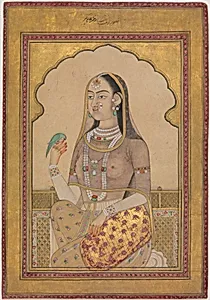
A Bejewelled Maiden with a Parakeet
Unknown Artist
ca. 1670–1700
Medium
Opaque watercolor and gold on paper
Dimensions
Image: H. 8 3/4 in. (22.2 cm) W. 12 1/2 in. (31.8 cm)
Classification
Codices
Department
Islamic Art
Museum
Metropolitan Museum of Art, New York, NY
Credit
Gift of Cynthia Hazen Polsky, 2011
Accession Number
2011.585
Rights
Public Domain
Tags
Art Historical Context
Behold the exquisite *A Bejewelled with a Parakeet a captivating portrait from around 1670–1700, created an unknown artist using opaque watercolor and gold on paper. Measuring about 8¾ by 12½ inches, this delicate work hails from the Metropolitan Museum of Art's Islamic Art Department, gifted by Cynthia Hazen Polsky in 2011. Classified as a codex folio, it exemplifies the refined miniature painting tradition of Mughal India, where artists layered vibrant gouache pigments and shimmering gold to achieve depth and intricate detail. In the opulent courts of the Mughal Empire during the late 17th century, such portraits celebrated feminine beauty and aristocratic refinement. The maiden, adorned in lavish jewelry, gazes tenderly at her parakeet—a beloved pet symbolizing companionship, affection, and the exotic allure of nature in elite society. Parrots and parakeets frequently appeared in these works, adding a touch of whimsy and liveliness to otherwise poised compositions. This artwork highlights the technical mastery of Mughal miniaturists: fine brushwork rendering silk fabrics, gemstones, and feathers with jewel-like precision. As a window into Indo-Islamic culture, it invites us to ponder the lives of women in a gilded era, blending portraiture with poetic symbolism for enduring allure.