
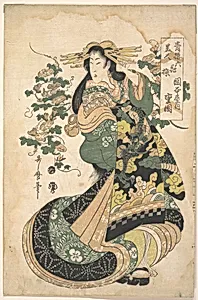
青楼美人 六花撰 岡本屋内 重岡|A Courtesan with Morning-glories on the Background
Medium
Woodblock print; ink and color on paper
Dimensions
H. 14 1/4 in. (36.2 cm); W. 9 3/8 in. (23.8)
Classification
Prints
Culture & Period
Japan · Edo period (1615–1868)
Department
Asian Art
Museum
Metropolitan Museum of Art, New York, NY
Credit
Museum Accession
Accession Number
JP1089
Rights
Public Domain
Tags
Art Historical Context
In the vibrant world of Edo-period Japan (1615–1868), this woodblock print by Utamaro II captures the allure of a courtesan amid blooming morning glories. Titled *A Courtes with Morning-glories on Background* (from the *Rokka-sen: Okamoto-ya no Shigeoka*), the image exemplifies *bijin-ga*, or "pictures of beautiful women," a popular genre in ukiyo art that celebrated the fleeting pleasures of the "floating world" – urban entertainment districts like Yoshiwara in Edo (modern Tokyo). Utamaro II, a gifted pupil of the master Kitagawa Utamaro, skillfully employs the woodblock technique, layering vibrant inks and colors on paper to evoke texture and depth. The courtesan's elegant pose, framed by cascading flowers and leaves, highlights her poise and sensuality, while the morning glories symbolize ephemeral beauty, mirroring the transient lives of these high-status entertainers. Produced during a time when prints like this were affordable luxury items, it offered everyday viewers a glimpse into glamorous yet regulated pleasure quarters. Measuring about 14 by 9 inches, this intimate work from the Metropolitan Museum of Art's Asian Art collection invites us to appreciate Japan's masterful fusion of nature and human grace, a hallmark of Edo printmaking that influenced global art.