
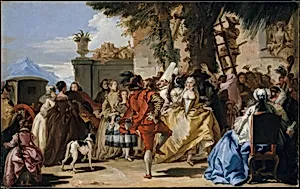
A Dance in the Country
ca. 1755
Medium
Oil on canvas
Dimensions
29 3/4 x 47 1/4 in. (75.6 x 120 cm)
Classification
Paintings
Department
European Paintings
Museum
Metropolitan Museum of Art, New York, NY
Credit
Gift of Mr. and Mrs. Charles Wrightsman, 1980
Accession Number
1980.67
Rights
Public Domain
Tags
Art Historical Context
Giovanni Domenico Tiepolo's *A Dance in the Country (ca. 1755) captures the lively spirit of 18th-century Rococo painting. The son of the illustrious Giovanni Battista Tiepolo, trained in his father's studio and mastered the family's signature style: exuberant compositions filled with theatrical flair, vibrant colors, and playful light effects rendered in oil on canvas. medium allowed the Tiepolo workshop to achieve the luminous, atmospheric quality that defined Venetian art during the height of the Republic's cultural golden age. The scene depicts a joyous rural dance featuring men and women in elaborate costumes, evoking the world of commedia dell'arte performers and festive gatherings. Actors mingle with peasants under open skies, their dynamic poses and flowing garments suggesting movement and merriment—a nod to the era's fascination with masquerades and pastoral escapism amid Venice's opulent society. Housed in the Metropolitan Museum of Art's European Paintings department as a generous gift from Mr. and Mrs. Charles Wrightsman in 1980, this 29 3/4 x 47 1/4-inch canvas exemplifies Domenico's skill in blending everyday revelry with high artistry. It invites visitors to step into a world of elegance and abandon, reminding us of Rococo's celebration of life's pleasures.
About the Artist
Giovanni Domenico Tiepolo · 1727–1804
Giovanni Domenico Tiepolo (1727-1804) was a Venetian painter, printmaker, and draftsman whose career spanned the twilight of the Rococo era. Born on August 30, 1727, in Venice as the eldest son of the celebrated Giovanni Battista Tiepolo, he worked both in his father's shadow and as a significant independent artist who developed a distinctly earthbound and humanistic vision. Domenico's importance...