
『扶桑高貴鑑』|A Mirror of Japan’s Nobility: The Emperor Meiji, His Wife, and Prince Haru (Fūsō kōki kagami)
August 8th, 1887
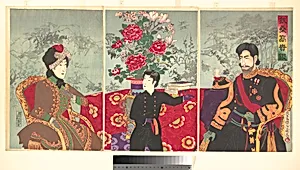
Medium
Triptych of woodblock prints; ink and color on paper
Dimensions
14 3/4 x 29 5/8 in. (37.5 x 75.2 cm)
Classification
Prints
Culture & Period
Japan · Meiji period (1868–1912)
Department
Asian Art
Museum
Metropolitan Museum of Art, New York, NY
Credit
Gift of Lincoln Kirstein, 1959
Accession Number
JP3241a–c
Rights
Public Domain
Tags
Art Historical Context
In the vibrant tradition of ukiyo-e woodblock, Yōshū Chikanobu (1838–1912), a master of the late Edo and Meiji periods, created *A Mirror of Japan’s Nobility: The Emperor Me, His Wife, and Haru* in 1887. This striking triptych—three panels that unfold to 29 5/8 inches widecaptures the imperial family in splendor, with the Emperor Meiji at center, flanked by Empress Shōken and their young son, Crown Prince Haru (later Emperor Taishō). Delicate ink and color on paper highlight luxurious robes adorned with floral motifs, evoking cherry blossoms and chrysanthemums symbolizing Japan's enduring nobility. Produced during the Meiji era (1868–1912), a time of rapid modernization and Western influence, the print reflects Japan's deliberate fusion of tradition and progress. Chikanobu, known for his historical and bijin-ga (beautiful women) scenes, here elevates the imperial image to foster national pride amid political upheaval, from the end of shogunate rule to constitutional reforms under Meiji. The triptych format, a hallmark of ukiyo-e, allowed for panoramic storytelling and intricate details achieved through collaborative carving and printing techniques. Housed in the Metropolitan Museum of Art since 1959, this work offers visitors a window into how art propagated the Meiji Restoration's ideals, blending aesthetic elegance with cultural reverence.
About the Artist
Yōshū (Hashimoto) Chikanobu · 1838–1912
Toyohara Chikanobu, born Hashimoto Naoyoshi in 1838 in Echigo Province (modern Niigata Prefecture), emerged as one of the last great ukiyo-e masters during Japan's Meiji era. The son of a low-ranking samurai retainer to the Sakakibara clan, he trained initially in the Kanō school of painting before turning to ukiyo-e printmaking. He studied under a disciple of Keisai Eisen, then joined the studio ...