Ctrl K
1838–1912
Toyohara Chikanobu, born Hashimoto Naoyoshi in 1838 in Echigo Province (modern Niigata Prefecture), emerged as one of the last great ukiyo-e masters during Japan's Meiji era. The son of a low-ranking samurai retainer to the Sakakibara clan, he trained initially in the Kanō school of painting before turning to ukiyo-e printmaking. He studied under a disciple of Keisai Eisen, then joined the studio of Ichiyūsai Kuniyoshi—adopting the name Yoshitsuru—and later worked with Utagawa Kunisada I and Toyohara Kunichika, from whom he took the family name Toyohara and the character "chika." A loyalist to the Tokugawa shogunate, Chikanobu fought bravely in the Boshin War, including the Battle of Ueno in 1868 and the Battle of Hakodate in 1869, before surrendering and pivoting to art around 1871.
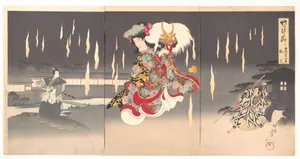
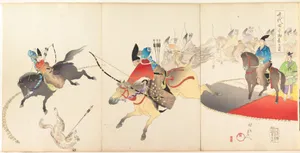
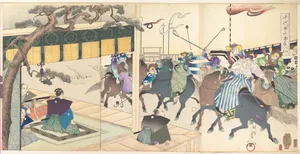
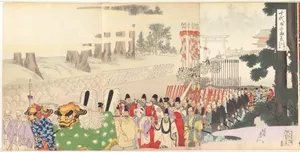
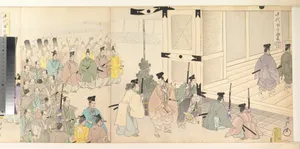
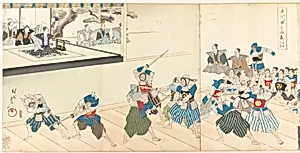
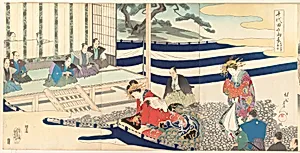
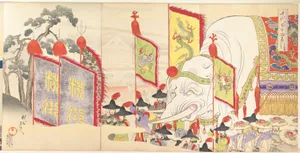
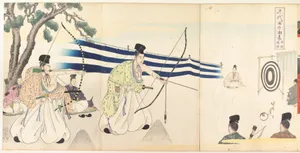
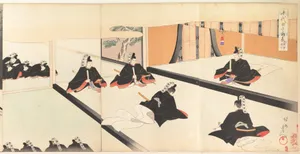
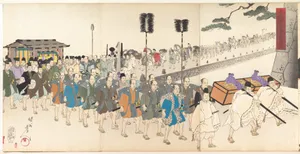
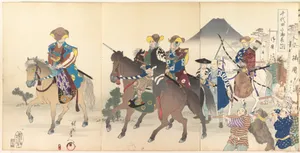
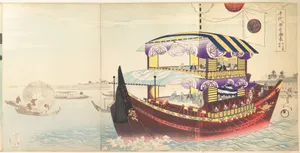
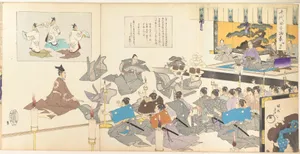
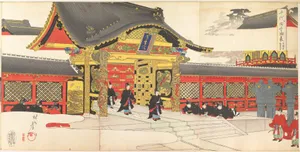
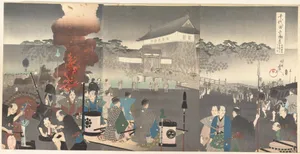
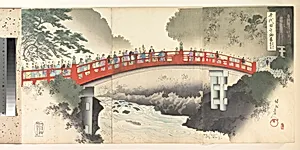
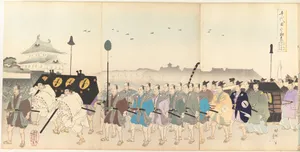
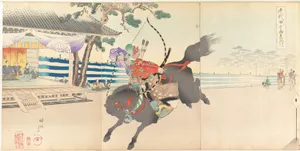
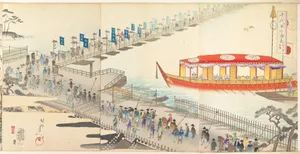
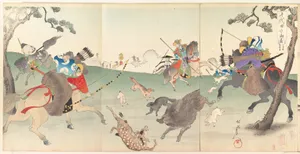
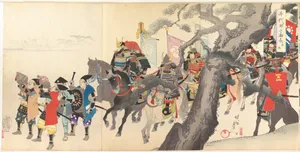
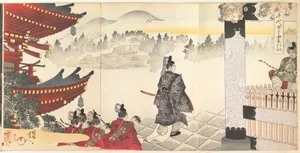
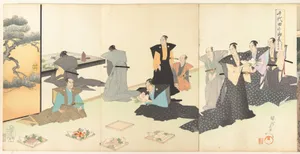
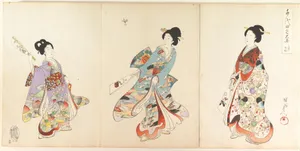
Settling in Tokyo, Chikanobu produced hundreds of woodblock prints, blending ukiyo-e traditions with Meiji modernity through vibrant aniline dyes, bokashi shading, and subtle Western perspective. He excelled in bijinga—images of beautiful women—depicting graceful figures in evolving fashions, from elaborate kimono to Western attire, while chronicling imperial court life, kabuki, mythology, and current events. Major series include *Setsugekka* (Snow, Moon, and Flowers, 1884–1886), featuring scenic views like Snow on Narihira Bridge; *Azuma Nishiki Chūya Kurabe* (Eastern Brocades, Day and Night Compared, 1886); *Shin Bijin* (True Beauties, 1897–1898); *Jidai Kagami* (Mirror of the Ages, 1896–1897), contrasting hairstyles across eras; and *Chiyoda no Ōoku* (Noble Ladies of the Chiyoda Palace, 1895–1896), a masterful 40-print depiction of palace interiors. He also documented wars, such as the First Sino-Japanese War (e.g., *Victory at Asan*, 1894) and Satsuma Rebellion (1877).
Chikanobu's prolific output—over 300 cataloged works—captured Japan's rapid transformation, from samurai decline to imperial resurgence, serving as both nostalgic revivalist and modern chronicler. Illustrating newspapers like *Kaishin Shimbun* and imperial portraits by special request, he influenced pupils like Yōsai Nobukazu and marked the bijinga tradition's close after Kunichika's death. Retiring around 1906, he died of stomach cancer in 1912 in Tokyo, his death signaling the end of traditional ukiyo-e. Today, his prints offer invaluable visual records of Meiji society, bridging Edo aesthetics with global change.