
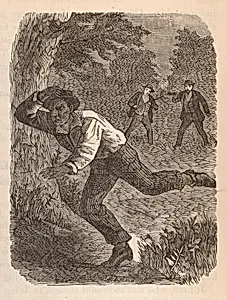
A Narrow Escape
Medium
Classification
Department
Smithsonian Collection
Museum
Smithsonian American Art Museum
Credit
National Portrait Gallery, Smithsonian Institution
Accession Number
S/NPG.2018.89.35
Rights
Public Domain
Tags
Art Historical Context
*A Narrow Escape* (1872) is a compelling print by FOY, an artist active in the 1870s, housed in the Smithsonian American Art and National Portrait Gallery collections. Created just seven years after the Civil War end, this work captures a pivotal moment in American history during Reconstruction, when stories of enslavement and liberation were still fresh in the national consciousness. As a print—a medium prized in the 19th century its affordability and ability to reach wide audiences—it likely served to disseminate powerful narratives visually, blending portraiture with dramatic storytelling. The image centers on Alfred S. Thornton, depicted as an enslaved man in a tense forest scene surrounded by trees. Clad in a hat and clutching a book, rifle in hand, he embodies the peril and determination of a fugitive's "narrow escape." These elements evoke the perilous journeys along the Underground Railroad or similar flights to freedom, highlighting themes of resistance, survival, and human dignity amid oppression. The portrait-style focus on Thornton personalizes the broader struggle against slavery, making the viewer's connection immediate and emotional. This artwork's cultural importance lies in its preservation of a raw slice of Black American experience, reminding us how visual prints amplified voices during a transformative era. A poignant addition to the Smithsonian's holdings, it invites reflection on resilience and the fight for liberty.