
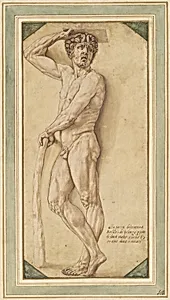
A Satyr
1544/1545
Medium
pen and brown ink with brown wash over black chalk on laid paper; laid down, with framing line in brown ink
Dimensions
overall: 41.6 x 20.3 cm (16 3/8 x 8 in.)
Classification
Drawing
Department
CG-E
Museum
National Gallery of Art, Washington, D.C.
Credit
Woodner Collection, Patrons' Permanent Fund
Accession Number
1991.190.2
Rights
Public Domain
Art Historical Context
Created around 1544–1545, Benvenuto Cellini’s drawing *A Satyr* offers a vivid glimpse into the working methods of one of the Italian Renaissance’s most versatile masters. Best known today for his bronze sculpture *Perseus with the Head of Medusa*, Cellini was equally celebrated as a goldsmith, medalist, and draftsman whose lively imagination found expression across many media. This sheet, executed in pen and brown ink with wash over black chalk, likely served as a preparatory study for a sculptural project, capturing the dynamic pose and muscular energy characteristic of Mannerist figure design. The satyr—part human, part goat—embodies the Renaissance fascination with classical mythology and the untamed forces of nature. Cellini’s confident line and subtle tonal washes convey both the creature’s animal vitality and its underlying humanity, demonstrating how drawings functioned as essential tools for exploring form and movement before committing to more permanent materials such as bronze or marble. Housed in the National Gallery of Art’s Woodner Collection, this rare surviving study allows modern viewers to witness the creative process behind Cellini’s larger works and to appreciate the expressive possibilities of Renaissance draftsmanship.