
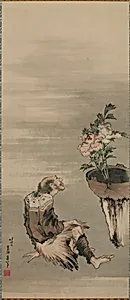
A Seated Man Looking at Potted Peonies
1760-1849
Classification
Painting
Department
Smithsonian Collection
Museum
Smithsonian American Art Museum
Credit
Gift of Charles Lang Freer
Accession Number
F1903.216
Rights
Public Domain
Tags
About this artwork
To 1903
Art Historical Context
**A Seated Man Looking Potted Peonies** Katsushika Hokus (1760–1849) captures a serene moment from Japan's Edo period (16151868), a time of cultural flourishing and urban sophistication. Hokusai, a legendary ukiyo-e master renowned for his woodblock prints like *The Great Wave off Kanagawa here presents a kakemono—a traditional hanging scroll painting—depicting a man seated in quiet contemplation before vibrant potted peonies.kiyo-e, meaning "pictures of the floating world," celebrated everyday beauty, nature, and fleeting pleasures, blending meticulous detail with dynamic composition. Peonies, bold symbols of prosperity, bravery, and honor in Japanese culture, dominate the scene, their lush blooms contrasting the man's understated pose. This intimate subject reflects Edo-era appreciation for seasonal flowers and introspective leisure, showcasing Hokusai's skill in evoking emotion through subtle brushwork and harmonious balance—hallmarks of his versatile style that influenced global art, from Impressionism to modern design. A cherished gift from collector Charles Lang Freer, this work entered the Smithsonian American Art Museum's collection by 1903, highlighting Freer's passion for Japanese art. Visitors can imagine it unfurled in a tokonoma alcove, inviting quiet reflection amid the "floating world."