
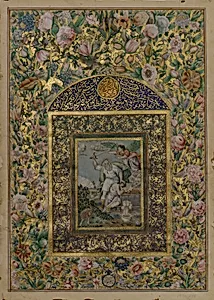
Abraham's Sacrifice
painting 3rd qtr. 18th century; border dated A.H. 1338/1919 CE
Medium
Opaque watercolor, ink, and gold on paper
Dimensions
H. 11 5/8 in. (29.5 cm) W. 8 3/8 in. (21.3 cm) Miniature: H. 3 3/8 (8.6 cm) W. 2 7/16 in. (6.2 cm)
Classification
Codices
Department
Islamic Art
Museum
Metropolitan Museum of Art, New York, NY
Credit
Bequest of Harold B. Allen, 1970
Accession Number
1970.275
Rights
Public Domain
Tags
Art Historical Context
Behold *Abraham's Sacrifice*, a 18th-century Persian painting by Fathallah Sani', nestled within a codex from the Islamic Art collection at the Metropolitan Museum of Art. in the third quarter of 1700s with a later border dated 1919 CE, this work illustrates the pivotal Quranic story of Prophet Ibrahim (Abraham) preparing to sacrifice his in obedience to God, only to be intervened by divine mercy—often depicted with an angel and a ram. The intimate scale of the miniature (just 3⅜ by 2⁷⁄₁₆ inches) invites viewers into a moment of profound faith and tension, surrounded by delicate floral motifs, birds, and angelic figures. Crafted in opaque watercolor, ink, and gold on paper—a hallmark of Safavid and post-Safavid Persian manuscript traditions—this piece showcases the meticulous techniques of Islamic miniature painting. Vibrant colors and shimmering gold heighten the spiritual drama, while fine ink lines define expressive figures amid lush, symbolic gardens. These codices were prized treasures, often part of illuminated religious texts, blending devotion with artistry. This bequest from Harold B. Allen highlights the enduring cultural reverence for Ibrahim's tale across Abrahamic faiths, symbolizing submission (*islām*) to the divine. A testament to Persian ingenuity, it bridges centuries, reminding us of art's power to eternalize sacred narratives. (198 words)