
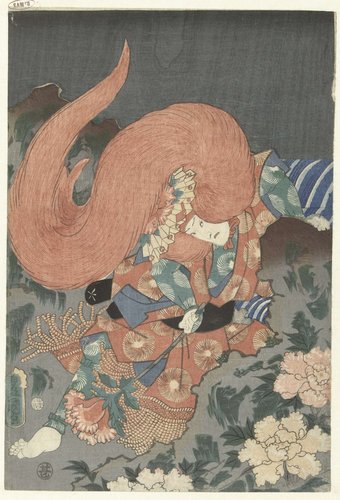
Acteur als leeuwendanser
Medium
nishiki-e
Dimensions
238; 351
Rights
Public Domain
About this artwork
verzamelaarsmerk, onder prent, gestempeld: Lugt 2760
Art Historical Context
**Acteur als leeuwend** (Actor as Lion Dancer) is a vibrant *nishiki-e* woodblock by Utagawa Kunisada I (1786–1864), one of the most masters of the ukiyo-e tradition. Created in 1860 during Japan's late Edo period, this vertical ōban-sized work (351 × 238 mm) exemplifies Kunisada's mastery ofusha-e, or actor portraits, which captured the dramatic flair of kabuki theater stars. *Nishiki-e*, meaning "brocade picture," refers to the luxurious multi-color printing technique using numerous woodblocks inked in precise hues, allowing for the rich textures and vivid details that made ukiyo-e so popular among Edo's urban audiences. The print depicts a kabuki performer transformed into a lion dancer—a dynamic role blending myth, ritual, and spectacle from traditional Japanese festivals like those honoring Shishi (lion spirits) for protection and prosperity. Kunisada's expressive style emphasizes the actor's fierce expression, flowing costume, and dynamic pose, immersing viewers in the theatrical world that defined 19th-century entertainment. As Toyokuni III, Kunisada bridged ukiyo-e's golden age, influencing later artists like those in the Impressionist movement abroad. Bearing a collector's mark (Lugt 2760) stamped beneath the image, this piece reflects its journey through esteemed European collections, underscoring ukiyo-e's global allure. A window into Japan's floating world, it invites us to celebrate the artistry of performance preserved in ink and paper.