
Actor as a Standing Beauty
About 1715
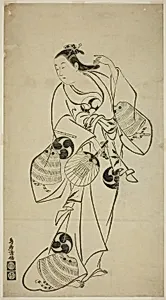
Medium
Woodblock print; sumizuri-e, kakemono-e
Dimensions
53.4 × 29.3 cm (21 × 11 1/2 in.)
Classification
woodblock print
Department
Arts of Asia
Museum
Art Institute of Chicago
Accession Number
19151
Rights
Public Domain
Art Historical Context
Step into the vibrant world of early 18th-century Japan with *Actor as a Standing Beauty* Torii Kiyomasu, created around 1715. This woodblock captures an onnagata—a male kabuki actor specializing in female roles—posed gracefully in elegant robes, embodying the idealized beauty of the "floating world" (ukiyo). Kiyomasu I, a key figure in the Torii, pioneered yakusha-e (actor prints), blending theater fandom with innovative printmaking during the Genroku era's cultural boom in Edo (modern Tokyo). Printed as a sumizuri-e (monochrome ink print) in the tall, narrow kakemono-e format—measuring 53.4 × 29.3 cm, like a hanging scroll—this work showcases early ukiyo-e techniques. Bold outlines and subtle ink shading create depth and movement without color, a precursor to the multicolored nishiki-e prints that would later dazzle. The format allowed affordable display in homes, making theater stars accessible to urban merchants and fans. Housed in the Art Institute of Chicago's Arts of Asia department, this piece highlights kabuki's golden age, where actors were celebrities and prints fueled a booming popular culture. It invites us to appreciate the artistry of disguise and the thrill of performance, bridging stage and street in Edo Japan's lively arts scene.
About the Artist
Torii Kiyomasu I · 1696–1716
Torii Kiyomasu I was a Japanese ukiyo-e artist working in the early eighteenth century, closely associated with the Torii school, one of the most important lineages in the history of Japanese woodblock printmaking. The Torii school was founded by Torii Kiyonobu, and Kiyomasu I is believed to have been either his son or a close pupil — the precise family relationship remains a matter of scholarly d...