
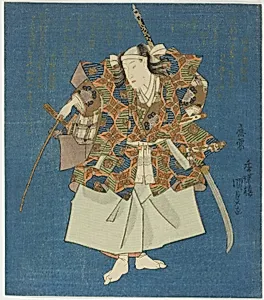
Actor in riding garb
Medium
Color woodblock print; shikishiban, surimono
Dimensions
21.9 × 19.3 cm (8 5/8 × 7 5/8 in.)
Classification
woodblock print
Department
Arts of Asia
Museum
Art Institute of Chicago
Accession Number
23475
Rights
Public Domain
Art Historical Context
Behold the captivating *Actor in Riding Garb* (1834), a exquisite color woodblock print bytagawa Kunisada, also known as Toyok III. This master of the ukiyo-e tradition—Japan's "pictures of the floating world"—specialized in vibrant depictions of kabuki theater stars, capturing their dramatic personas with unparalleled flair. Printed in the intimate shikishiban (a square 21.9 × 19.3 cm sheet), it showcases an actor poised in elaborate riding attire, evoking the theatrical splendor of Edo-period (1603–1868) Japan. As a surimono, or luxury print, this work was likely a privately commissioned New Year's greeting for an elite audience, featuring superior craftsmanship like rich colors, fine carving, and subtle textures from woodblock techniques. Kunisada's bold lines and vivid hues highlight the actor's dynamic pose and ornate costume, blending realism with stylized exaggeration typical of yakusha-e (actor portraits). These prints were cultural treasures, disseminating kabuki idols' images to fans and preserving the era's theatrical zeitgeist. Housed in the Art Institute of Chicago's Arts of Asia department, this gem offers a window into 19th-century Japan's thriving print culture, where art and entertainment intertwined. Imagine the thrill of spotting such a print at a teahouse— a stylish snapshot of fleeting fame!
About the Artist
Utagawa Kunisada I (Toyokuni III) · 1786–1864
Utagawa Kunisada I, also known as Toyokuni III (1786–1865), was born Sumida Shōgorō in the Honjo district of Edo (modern Tokyo) into a family that operated a hereditary ferry-boat service, providing stability after his father's early death. Displaying prodigious talent in drawing from childhood, he became an apprentice to the master Utagawa Toyokuni I around 1801 at age fifteen, entering the prest...