
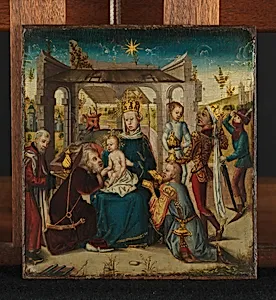
Adoration of the Magi
ca. 1470–90
Medium
Oil and gold on beech panel
Dimensions
Overall: 7 1/2 x 6 7/8 in. (19 x 17.5 cm); Painted Surface: 7 3/16 x 6 3/4 in. (18.3 x 17.2 cm)
Classification
Paintings
Culture
German, Middle Rhine(?)
Department
Robert Lehman Collection
Museum
Metropolitan Museum of Art, New York, NY
Credit
Robert Lehman Collection, 1975
Accession Number
1975.1.134
Rights
Public Domain
Tags
Art Historical Context
This exquisite small-scale panel, *Adoration of the Magi hails from Germany—likely the Middle Rhine regionaround 1470–90, a time when late Gothic traditions blended with emerging Renaissance influences. Depicting the biblical scene of the three wise men presenting gifts to the Christ Child and Virgin Mary, it captures a moment of profound reverence central to Christian devotion. Such intimate works were often created for private altars or personal prayer, reflecting the era's emphasis on spiritual contemplation amid the religious fervor of pre-Reformation Europe. Painted in oil with gold leaf on beech wood, the artwork exemplifies masterful Northern European techniques. The gold imparts a luminous, heavenly glow to the holy figures, enhancing their divine aura, while oil allowed for vibrant colors and fine details in the figures' expressive faces and elaborate robes. At just 7½ x 6⅞ inches, its diminutive size invites close viewing, underscoring the craftsmanship of anonymous German masters who prioritized emotional depth over grandeur. Now in the Metropolitan Museum of Art's Robert Lehman Collection, this gem offers a window into 15th-century piety and artistry, reminding us how everyday believers connected with the sacred through portable treasures.
About the Artist
German
**German, Franconia (active ca. 1485–1500)** was an anonymous artist from the Franconian region of northern Bavaria, Germany, renowned for his contributions to late Gothic graphic arts. Little is known of his early life or training, as details about many anonymous masters from this era remain undocumented. Franconia, with its vibrant artistic centers like Nuremberg, fostered a rich tradition of re...