Ctrl K
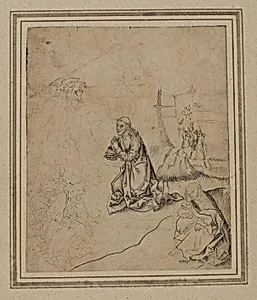
**German, Franconia (active ca. 1485–1500)** was an anonymous artist from the Franconian region of northern Bavaria, Germany, renowned for his contributions to late Gothic graphic arts. Little is known of his early life or training, as details about many anonymous masters from this era remain undocumented. Franconia, with its vibrant artistic centers like Nuremberg, fostered a rich tradition of religious imagery during the transition from the Middle Ages to the Renaissance, though specific mentors or schools for this artist have not been identified.
His style exemplifies the meticulous draftsmanship of Franconian late Gothic art, characterized by expressive pen and brushwork in grayish-black ink, intricate woodcuts on vellum, and a focus on devotional Christian subjects. Works often feature dramatic narratives with emotional depth, rendered in a linear precision suited to both standalone drawings and printmaking precursors. This approach aligned with the region's growing emphasis on detailed, portable religious art amid the spread of woodcut techniques.
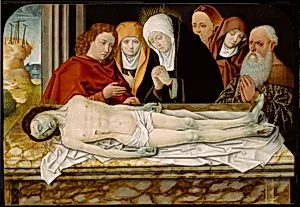
Among his known works in prominent collections are *Agony in the Garden* (ca. 1500), a poignant pen-and-ink depiction of Christ's suffering, and *Christ on the Cross* (ca. 1485), a hand-colored woodcut on vellum adorned with tooled gold leaf, showcasing technical virtuosity. These pieces, part of larger holdings numbering around 58 attributed artworks, highlight his skill in capturing spiritual intensity through minimal yet evocative means.
Though unidentified by name, German, Franconia's output endures as a testament to Franconia's pivotal role in German graphic arts, bridging medieval piety and emerging Renaissance naturalism. His anonymous legacy enriches museum collections worldwide, offering glimpses into the devotional life of 15th- and early 16th-century Franconia and influencing the evolution of print culture in the Holy Roman Empire.