
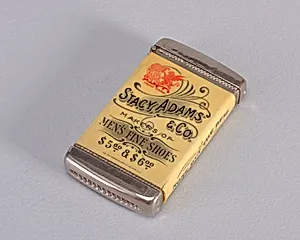
Advertisement for "Hulbert & Parker, Fashionable Footware"
1900–10
Classification
containers
Department
Smithsonian Collection
Museum
Smithsonian American Art Museum
Credit
Gift of Stephen W. Brener and Carol B. Brener
Accession Number
1980-14-785
Rights
Public Domain
About this artwork
Research in Progress
Art Historical Context
Step into the vibrant world of early 20th-century American advertising with this charming piece from the Smithsonian American Art Museum: *Advertisement for "Hul & Parker, Fashionableware"*, produced by the Whitehead & Ho Company around 1900–1910. As a classified "container," it likely served as a clever promotional novelty—perhaps a matchbox, tin, or pocket-sized holder—designed to catch the eye of shoppers and promote a stylish footwear retailer. Donated by collectors Stephen W. Brener and Carol B. Brener, this artifact highlights the ingenuity of commercial design during the Progressive Era. Whitehead & Hoag, a pioneering firm in advertising ephemera, specialized in mass-producing eye-catching premiums that blended functionality with bold graphics. This era saw explosive growth in consumer culture, with businesses like Hulbert & Parker using such items to advertise "fashionable footware" amid rising demand for ready-to-wear shoes. Though the exact medium awaits further research, the piece exemplifies how everyday objects became canvases for persuasive art, reflecting America's shift toward modern marketing. Today, it offers a delightful glimpse into Gilded Age commerce, where style met utility. Imagine a bustling street scene where this tidy container, slipped into a pocket, subtly nudged consumers toward the latest in fashionable footwear— a testament to advertising's enduring allure. (198 words)