
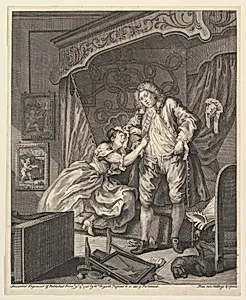
After
December 15, 1736
Medium
Engraving; second state of three
Dimensions
sheet: 15 13/16 x 12 11/16 in. (40.1 x 32.2 cm)
Classification
Prints
Department
Drawings and Prints
Museum
Metropolitan Museum of Art, New York, NY
Credit
Harris Brisbane Dick Fund, 1932
Accession Number
32.35(146)
Rights
Public Domain
Tags
Art Historical Context
William Hogarth's *After* (1736), a masterful engraving from the second state three, captures a moment of disheveled regret in an intimate bedroom setting. Created in the heart of 18th-century, this print forms part of Hogarth's iconic "Before and After" pair, a moralistic narrative warning against the fleeting temptations of seduction. The scene unfolds with a tousled man and woman amid the chaos of discarded clothes, flickering candlelight, and a watchful dog—Hogarth's signature touch for injecting wry humor and symbolism into everyday vice. As a pioneer of satirical printmaking, Hogarth revolutionized the medium by producing affordable engravings that brought his vivid storytelling to the masses, bypassing traditional painting markets. This intricate etching and engraving technique allowed for rich detail, from rumpled bedsheets to expressive faces conveying post-coital dismay, making it a precursor to modern graphic novels. Printed on December 15, 1736, it reflects Georgian England's preoccupation with morality amid rising urban libertinism. Housed in the Metropolitan Museum of Art's Drawings and Prints department (Harris Brisbane Dick Fund, 1932), *After* exemplifies Hogarth's enduring cultural bite: a cheeky yet cautionary tale that still amuses and edifies visitors today. (198 words)
About the Artist
William Hogarth · 1697–1764
William Hogarth (1697-1764) was an English painter, printmaker, and pictorial satirist who became the first great English-born artist to attract admiration abroad. Born into poverty in London, the son of a failed schoolmaster who was imprisoned for debt, Hogarth's early experiences with the harsh realities of 18th-century urban life profoundly shaped his artistic vision. After apprenticing with si...