
Aggaeus
published 1613
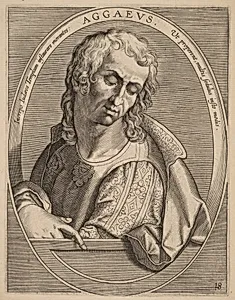
Medium
engraving on laid paper
Dimensions
plate: 17.2 x 13.3 cm (6 3/4 x 5 1/4 in.) sheet: 24.3 x 19 cm (9 9/16 x 7 1/2 in.)
Classification
Department
CG-E
Museum
National Gallery of Art, Washington, D.C.
Credit
Ailsa Mellon Bruce Fund
Accession Number
1974.55.7.r
Rights
Public Domain
Art Historical Context
This engraving titled *Aggaeus*, created by Theodor Galle after a design by Jan van der Straet and published in 1613, exemplifies the vibrant print culture of the early seventeenth century. Galle, a skilled Flemish engraver, translated van der Straet’s dynamic composition onto laid paper, capturing fine details through precise line work. The modest plate size of just over six by five inches allowed the image to circulate widely, bringing sophisticated artistic ideas to collectors and scholars across Europe. Jan van der Straet, also known as Stradanus, spent much of his career in Florence designing series that celebrated biblical figures, virtues, and inventions. His drawings were frequently turned into engravings by specialists like Galle, extending the reach of Mannerist style beyond painted commissions. Such reproductive prints played a crucial role in disseminating religious imagery and artistic innovation during the Counter-Reformation. Today, this impression in the National Gallery of Art’s collection highlights the enduring appeal of these portable works of art. The crisp lines and tonal contrasts achieved through engraving continue to reward close looking, offering modern viewers a window into both the technical mastery and devotional spirit of the period.