
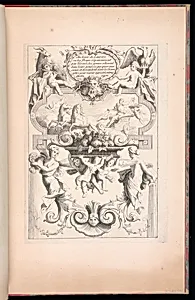
Allegorical Scene with Aurora
Medium
Classification
Department
Smithsonian Collection
Museum
Smithsonian American Art Museum
Credit
Purchased for the Museum by the Advisory Council
Accession Number
1921-6-236-34
Rights
Public Domain
About this artwork
Research in Progress
Art Historical Context
**Allegorical Scene with Aurora***Jacques Fouquet (French, active 168–1704), 1707–44, Print* Smithsonian American Art Museum into the luminous world of Jacques Fouquet's *Allegorical Scene with Aurora a captivating French print from the early 18th century. Fouquet, active during the vibrant late Baroque era, crafted this work—likely produced posthumously between 1707 and 1744—as an intricate engraving that embodies the period's love for allegory. Aurora, the Roman goddess of dawn, center stage, symbolizing renewal, light, and the triumph of day over night. Such mythological scenes were popular in European courts, blending classical mythology with ornate symbolism to inspire wonder and contemplation. As a print, this artwork highlights the revolutionary medium of the time, allowing intricate designs to be reproduced and shared widely beyond elite patrons. Fouquet's technique, rooted in meticulous line work, would have captured delicate details of figures, skies, and allegorical motifs, making grand artistic visions accessible to a broader audience. Acquired by the Smithsonian American Art Museum through the Advisory Council, it reflects the enduring appeal of French printmaking's elegance and narrative depth. Though research continues, this piece invites us to ponder the interplay of myth and artistry in an age of enlightenment, where dawn's promise illuminated both canvas and culture. (198 words)