
Allegory of Autumn
1753
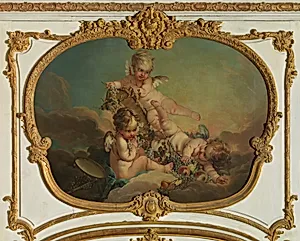
Medium
Oil on canvas
Dimensions
Irregular, 44 3/4 x 63 3/4 in. (113.7 x 161.9 cm)
Classification
Paintings
Department
European Paintings
Museum
Metropolitan Museum of Art, New York, NY
Credit
Purchase, Mr. and Mrs. Charles Wrightsman Gift, 1969
Accession Number
69.155.1
Rights
Public Domain
Tags
Art Historical Context
François Boucher’s *Allegory of Autumn* (1753) captures the playful elegance of the French Rococo period. As one of the era’s leading painters, Boucher specialized in lighthearted mythological and allegorical scenes for aristocratic patrons, favoring soft pastel tones, fluid brushwork, and graceful figures. This oil-on-canvas work, with its irregular shape, likely formed part of a decorative ensemble—perhaps a dessus-de-porte or panel within a grand interior—reflecting the period’s taste for integrated, immersive ornament. The painting personifies autumn through a lively gathering of putti surrounded by ripe apples and clusters of grapes, symbols of the harvest’s abundance. These cherubic figures, rendered with Boucher’s characteristic warmth and sensuality, evoke the season’s fruitful generosity while celebrating nature’s cyclical bounty. Such allegories of the four seasons were popular in 18th-century France, blending classical references with contemporary delight in pleasure and luxury. Today in the Metropolitan Museum of Art’s European Paintings collection, the work offers visitors a glimpse into Rococo’s refined yet joyful spirit, where art transformed everyday themes into celebrations of beauty and abundance.
About the Artist
François Boucher · 1703–1770
François Boucher (1703–1770) stands as the quintessential master of French Rococo painting and the most celebrated decorative artist of the 18th century. Born in Paris to a lace designer, Boucher created a visual language that perfectly embodied the refined taste, sensuality, and elegance of Louis XV's court. His prolific output—encompassing paintings, tapestry designs, theatrical sets, and decora...