
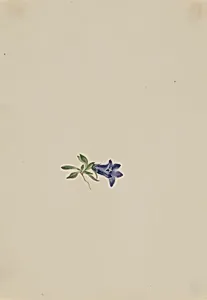
Alpine Harebell (Campanula lasiocarpa)
Medium
Painting
Classification
Painting
Department
Smithsonian Collection
Museum
Smithsonian American Art Museum
Credit
Smithsonian American Art Museum, Gift of the artist
Accession Number
1970.355.705
Rights
Public Domain
Tags
Art Historical Context
Mary Vaux Walcott'sAlpine Harebell (anula lasiocarpa)* captures the delicate beauty of this high-altitude wildflower, native to alpine meadows. Painted by the intrepid artist mountaineer (1860–1940), the work exemplifies her passion for documenting North American flora with scientific precision and artistic grace. Walcott, who scaled rugged peaks in the Canadian Rockies her husband, paleontologist Charles Dool Walcott, created over 1,000 such paintings, blending botany and fine art. As a gifted amateur botanist, Walcott painted her subjects en plein air, ensuring lifelike accuracy in form, color, and habitat. This undated painting, gifted by the artist to the Smithsonian American Art Museum, reflects early 20th-century trends in natural history illustration, where watercolor-like techniques (common in her oeuvre) highlighted the fragility of alpine ecosystems. *Campanula lasiocarpa*, with its nodding blue bells and fuzzy seed pods, symbolizes resilience in harsh environments—a theme echoing Walcott's own adventurous spirit. Housed in the Smithsonian Collection, this piece invites visitors to appreciate how art preserves vanishing wilderness, bridging scientific curiosity and aesthetic wonder.