
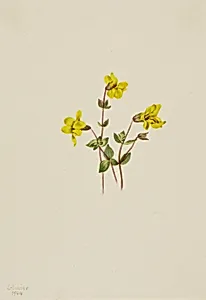
Alpine Monkey Flower (Mimulus caespitosus)
Medium
Painting
Classification
Painting
Department
Smithsonian Collection
Museum
Smithsonian American Art Museum
Credit
Smithsonian American Art Museum, Gift of the artist
Accession Number
1970.355.712
Rights
Public Domain
Tags
Art Historical Context
Mary Vaux Walcott's *Alpine Monkey Flower (Mimulus caespitosus)*, painted in 1904, captures the delicate beauty of this rare alpine wildflower native to high-elevation rocky slopes. As part of the Smithsonian American Art Museum's collection—gifted directly by the artist—this painting exemplifies Walcott's passion for blending art and science. A skilled mountaineer and naturalist, Walcott documented North American flora during expeditions in the Canadian Rockies, creating precise yet evocative renderings that highlight the flower's clustered blooms and tufted foliage. Walcott's work belongs to the tradition of botanical illustration, where painting served both aesthetic and scientific purposes in the early 20th century. Her watercolor technique, though simply listed as "painting," emphasizes luminous color and meticulous detail, making the ephemeral alpine species accessible to museumgoers. This piece reflects a era when women artists like Walcott broke barriers in fieldwork, contributing to botanical knowledge while elevating wildflowers to fine art. Today, *Alpine Monkey Flower* invites visitors to appreciate the intersection of nature's fragility and human curiosity, a timeless reminder of conservation amid changing landscapes. (198 words)