
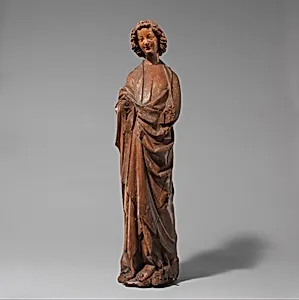
Altar Angel (one of a pair)
Unknown Artist
ca. 1275–1300
Medium
Oak with traces of paint
Dimensions
29 1/2 × 6 1/2 × 7 in. (75 × 16.5 × 17.8 cm)
Classification
Sculpture-Wood
Culture
French
Department
The Cloisters
Museum
Metropolitan Museum of Art, New York, NY
Credit
The Cloisters Collection, 1952
Accession Number
52.33.1
Rights
Public Domain
Tags
Art Historical Context
This exquisite *Altar Angel*, one a pair carved from oak around 1275–1300, hails from medieval France during the height of the Gothic era. Standing nearly 30 inches tall, the slender figure exemplifies the period's emphasis on spiritual elegance, with elongated proportions and graceful drapery that evoke a sense of heavenly poise. Originally part of a church altar ensemble, such angels flanked sacred scenes, serving as divine attendants to guide worshippers' gazes upward toward the divine. Crafted in oak—a durable wood favored for its fine grain and resistance to warping—the sculpture once bore vibrant paints and gilding, of which faint traces remain. This polychrome technique brought biblical figures to life, transforming wood into radiant intermediaries between heaven and earth. Produced by an unknown artisan, likely in a workshop near major cathedrals like Notre-Dame, it reflects the collaborative craft of Gothic sculpture, where anonymity underscored devotion over individual fame. Today, housed in The Cloisters at the Metropolitan Museum of Art, this angel invites visitors to ponder the artistry of faith in 13th-century France, where every carved fold whispered of eternity. A testament to medieval piety, it reminds us how wood could once soar like wings.