
Medium
architecture
Classification
architecture
Department
Smithsonian Collection
Museum
Smithsonian American Art Museum
Credit
Museum purchase through gift of various donors and from Eleanor G. Hewitt Fund
Accession Number
1938-88-1016
Rights
Public Domain
About this artwork
Research in Progress
Art Historical Context
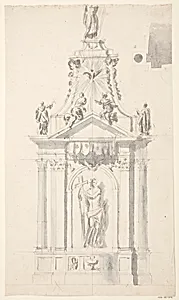
**Altar** *Giuseppe Valadier (Italian, 1762–1839), 1775* *Architecture; Smithsonian Collection, Smithsonian American Art Museum* Step into the world of 18th-century Italian artistry with Giuseppe Valadier's "Altar," a striking architectural piece created when the young artist was just 13 years old. Born in Rome, Valadier would go on to become a leading figure in the transition from Baroque opulence to the refined elegance of Neoclassicism, drawing inspiration from ancient Roman antiquity. This early work, classified as architecture, likely served as a design or model for a sacred space, reflecting the era's deep Catholic traditions and the Church's enduring role in commissioning monumental structures. Crafted in 1775 amid Europe's Enlightenment fervor, the altar embodies the period's emphasis on harmony, proportion, and classical motifs—hallmarks of emerging Neoclassical ideals. Its inclusion in the Smithsonian American Art Museum, through a generous museum purchase supported by various donors and the Eleanor G. Hewitt Fund, underscores its rarity and appeal. Though research is ongoing, this piece offers a window into Valadier's precocious talent and the cultural interplay between Italy's artistic heritage and global collections today. (198 words)