
Amphora
300-200 B.C.
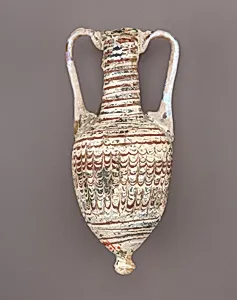
Medium
Decorative Arts-Glass
Classification
Decorative Arts-Glass
Department
Smithsonian Collection
Museum
Smithsonian American Art Museum
Credit
Smithsonian American Art Museum, Gift of John Gellatly
Accession Number
1929.8.157.31
Rights
Public Domain
Art Historical Context
Step into the world of ancient Roman craftsmanship with this elegant glass *Amphora*, crafted by an unidentified artist around 300-200 B.C. during the early Roman Republic. Amphorae this were versatile vessels, typically used for storing and transporting olive oil, wine, or grains, but this rare glass example elevates it to a status symbol, showcasing the sophistication of Roman decorative arts. Glassmaking in this era was a labor-intensive art, likely employing core-forming techniques where molten glass was wound around a removable clay core. Produced before the invention of glassblowing in the 1st century B.C., such pieces highlight Rome's growing trade networks with the Hellenistic East, where advanced glass technologies originated. Housed in the Smithsonian American Art Museum as a gift from John Gellatly, this artifact from the Smithsonian Collection exemplifies the transition from utilitarian pottery to luxurious transparents that dazzled at elite banquets. Its survival speaks to the durability and allure of Roman innovation, offering a glimpse into daily life and elite tastes amid Rome's expansion across the Mediterranean. A true treasure for admirers of antiquity!