
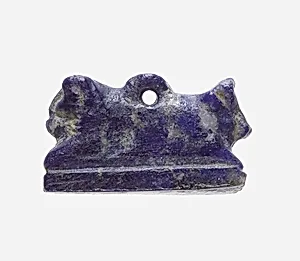
Amulet: lion and bull back to back
Unknown Artist
522–343 B.C.
Medium
Lapis lazuli
Dimensions
L.1.5 cm (9/16 in.)
Classification
Amulet, lions back to back
Period
Late Period
Department
Egyptian Art
Museum
Metropolitan Museum of Art, New York, NY
Credit
Bequest of Mary Anna Palmer Draper, 1915
Accession Number
15.43.50
Rights
Public Domain
Tags
Art Historical Context
This exquisite lapis lazuli am, measuring just 1.5 cm long, depicts a lion and bull standing back to back, crafted during Egypt's Late Period (522343 B.C.). Carved from the vibrant blue stone prized since ancient times and sourced from distant Afghanistan, the amulet showcases masterful stoneworking techniques. Artisans hollowed and polished the hard lapis to capture fine details in the animals' muscular forms and alert postures, a testament to the precision of Egyptian lapidaries despite the object's diminutive scale. In ancient Egyptian culture, amulets like this served as potent talismans, worn or carried for protection against evil forces. Lions embodied fierce power, solar deities like Sekhmet, and royal might, while bulls symbolized strength, fertility, and the god Apis. Positioned back to back, they may represent balanced opposition—wild ferocity guarding steadfast vitality—evoking the harmony of cosmic forces central to Egyptian cosmology. Housed in the Metropolitan Museum of Art's Egyptian Art department through the 1915 bequest of Mary Anna Palmer Draper, this rare artifact offers a glimpse into everyday mysticism of the Late Period, a time of foreign influences yet enduring pharaonic traditions. Visitors, imagine slipping this tiny guardian into your own pocket for otherworldly safeguarding!