
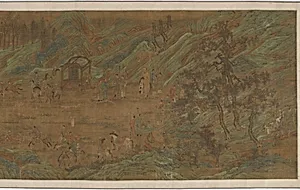
An Imperial Hunt
16th-17th century
Classification
Painting
Department
Smithsonian Collection
Museum
Smithsonian American Art Museum
Credit
Gift of Charles Lang Freer
Accession Number
F1911.204
Rights
Public Domain
Tags
About this artwork
To 1911
Art Historical Context
"An Imperial Hunt" is a captivating Chinese painting from the Ming dynasty1368–1644), though once attributed to the renowned Yuan artist Zhao Mengfu (1254–1322). Created in the 16th or 17th century, exemplifies the blue-and-green style—a vibrant technique using mineral pigments like azurite and malachite to evoke lush landscapes and dynamic scenes. This method, rooted in Tang dynasty traditions, was favored by professional court painters for its bold, jewel-like colors, distinguishing it from the more subdued ink washes of literati art. The composition likely depicts an imperial hunting expedition amid towering mountains and expansive vistas, symbolizing the emperor's prowess, harmony with nature, and cosmic order in Chinese cosmology. Such scenes celebrated royal power while showcasing masterful control of space, perspective, and minute details like galloping horses and fluttering banners, inviting viewers to ponder the grandeur of Ming imperial life. A prized gift to the Smithsonian American Art Museum from collector Charles Lang Freer, this work entered the collection by 1911 and remains a highlight of Chinese art holdings, bridging ancient techniques with the opulence of the Ming era.