
Andiron
Unknown Artist
1795–1815
Medium
Brass, iron
Dimensions
23 1/4 x 23 1/2 in. (59.1 x 59.7 cm)
Classification
Andiron
Culture
American
Department
The American Wing
Museum
Metropolitan Museum of Art, New York, NY
Credit
Gift of the Members of the Committee of the Bertha King Benkard Memorial Fund, 1946
Accession Number
46.67.126
Rights
Public Domain
Tags
Art Historical Context
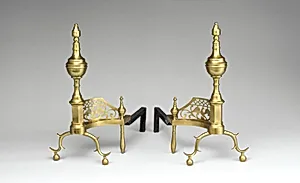
This elegant pair of andirons, crafted in between 1795 and 1815, exemplifies the refined decorative arts of the early Federal period. Standing at an impressive 23¼ x 23½ inches, these brass and iron supports were designed to hold logs in fireplaces, transforming a functional necessity into a statement of style and comfort in prosperous households. The bird motifs, hinted at in their design, evoke neoclassical influences popular at the time, symbolizing freedom, vigilance, or classical antiquity—common themes in post-Revolutionary American homes aspiring to European sophistication. Made by an unknown artisan, the andirons highlight the craftsmanship of regional metalsmiths who blended sturdy iron bases for durability with polished brass finials for visual appeal. Brass, prized for its warm golden hue and resistance to tarnish, allowed for intricate detailing that caught the firelight, enhancing the room's ambiance during long winter evenings. Iron provided the robust structure needed for heavy firewood. Today, housed in The Metropolitan Museum of Art's American Wing as a gift from the Bertha King Benkard Memorial Fund in 1946, these andirons offer a glimpse into everyday luxury. They remind us how ordinary objects became canvases for cultural expression, bridging utility and artistry in the young nation's domestic life.