
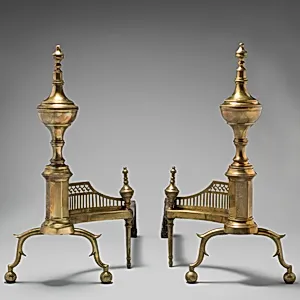
Pair of andirons
Unknown Artist
18th century
Medium
Brass
Dimensions
Each H. 23 1/4 in. (59.1 cm)
Classification
Metalwork-Brass
Culture
British
Department
European Sculpture and Decorative Arts
Museum
Metropolitan Museum of Art, New York, NY
Credit
The Sylmaris Collection, Gift of George Coe Graves, 1930
Accession Number
30.120.93, .94
Rights
Public Domain
Art Historical Context
Step into the cozy hearths of 18th-century Britain with this elegant pair of brass andirons, essential companions to any grand fireplace. Crafted in the Georgian era, these firedogs—standing at 23¼ inches tall—supported burning logs while elevating the flames for better airflow and safety. Their gleaming brass medium, prized for its durability and warm luster, was a hallmark of British metalwork, often produced in workshops like those in Birmingham, a hub of the burgeoning Industrial Revolution. Though the artist remains unknown, these andirons exemplify the refined craftsmanship of European decorative arts, where functionality met opulence. Brass was cast, hammered, and polished to withstand intense heat, sometimes adorned with neoclassical motifs symbolizing prosperity and domestic comfort. In well-to-do homes, such pieces were status symbols, transforming utilitarian fireplaces into focal points of hospitality and warmth. Today, gifted to the Metropolitan Museum of Art in 1930 from The Sylmaris Collection by George Coe Graves, they offer a tangible glimpse into everyday luxury. Imagine the crackle of logs and flickering light dancing across their surfaces— a reminder of how even the humblest tools of home life carried artistic grace.