
Andrew Johnson
Medium
Classification
Department
Smithsonian Collection
Museum
Smithsonian American Art Museum
Credit
National Portrait Gallery, Smithsonian Institution
Accession Number
NPG.85.167
Rights
Public Domain
Tags
About this artwork
Born Raleigh, North Carolina
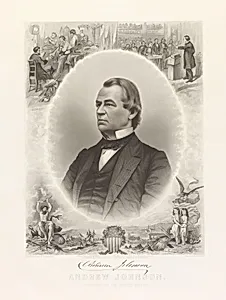
Art Historical Context
In 1866, engraver John Chester Buttre this striking print portrait of Andrew Johnson, the 17th of the United States, capturing him at a pivotal moment in American history. Born in Raleigh, North Carolina, Johnson rose from humble beginnings as a tailor to become of Greeneville, Tennessee, Vice President, and then President following Abraham Lincoln's assassination in 1865. Buttre, a prolific 19th-century portraitist for his detailed engravings, produced this work amid the turbulent Reconstruction era, when Johnson's lenient policies toward the South sparked intense national debate. The print showcases Johnson amid symbolic elements that underscore his American identity and authority: a podium suggesting oratory prowess, a clock and table evoking governance, an eagle for national strength, a tree for endurance, and an escutcheon heralding presidential heraldry. As a print—a democratic medium that allowed widespread dissemination before photography dominated— this piece from the Smithsonian American Art Museum's collection made the Tennessee leader's image accessible to the public, blending realism with patriotic iconography. Today, it offers a window into post-Civil War visual culture, reminding visitors of Johnson's unlikely journey and the era's fragile union. (198 words)