
Andrew W. Mellon
1776 to 1800
Medium
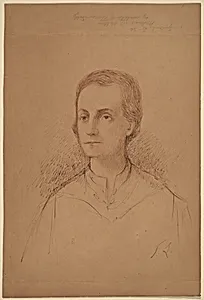
pen and brown ink and red crayon on brown wove paper
Dimensions
sheet: 27.4 × 18.5 cm (10 13/16 × 7 5/16 in.)
Classification
Drawing
Department
CG-W
Museum
National Gallery of Art, Washington, D.C.
Credit
Paul Mellon Collection
Accession Number
1964.24.3
Rights
Public Domain
Art Historical Context
This delicate drawing, titled *Andrew W. Mellon* and attributed to an imitator of Thomas Sully, dates to between 1776 and 1800. Created on brown wove paper with pen and brown ink accented by red crayon, it measures a modest 27.4 × 18.5 cm, typical for intimate portrait studies of the era. Thomas Sully, the renowned American portraitist (1783–1872), was celebrated for his fluid lines and romantic elegance, influences echoed here in the imitator's precise yet expressive technique. The mixed media—ink for outlines and shading, red crayon for highlights—allowed for nuanced modeling, a practical choice for preliminary sketches before oil paintings. Emerging during the early American Republic, such works captured the poised likenesses of prominent figures amid revolutionary fervor and nation-building. Brown wove paper, a sturdy innovation of the late 18th century, provided a warm tonal base that enhanced the drawing's lifelike warmth. Though by an anonymous follower, it reflects Sully's neoclassical roots, blending British portrait traditions with emerging American identity. Housed in the National Gallery of Art's Paul Mellon Collection, this piece honors the Mellons' legacy as philanthropists. Its survival offers a glimpse into 18th-century draftsmanship, bridging atelier practices and personal commemoration for today's visitors.