
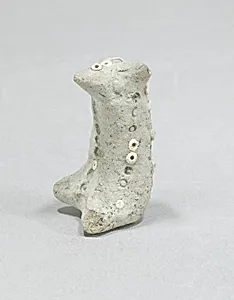
Animal figure
Unknown Artist
ca. 1850–1640 B.C.
Medium
Mud, faience
Dimensions
H. 4.5 × W. 2.3 × D. 1.9 cm (1 3/4 × 7/8 × 3/4 in.)
Classification
Figurine, animal
Period
Middle Kingdom
Department
Egyptian Art
Museum
Metropolitan Museum of Art, New York, NY
Credit
Rogers Fund, 1915
Accession Number
15.3.273
Rights
Public Domain
Tags
Art Historical Context
This petite animal figure, crafted around 1850–1640 B.C. during Egypt's Middle Kingdom (late Dynasty 12 to early Dynasty 13), exemplifies the era's masterful use of faience—a glazed ceramic made from crushed quartz, lime, and clay, fired to create vibrant turquoise hues symbolizing eternity and the Nile's fertility. Combined with a mud base, the medium allowed for affordable, durable production of small-scale objects like this one, measuring just 4.5 cm high. Such figurines were ubiquitous in ancient Egyptian life, likely serving as amulets, votive offerings, or protective talismans worn or placed in tombs. The Middle Kingdom marked a golden age of stability and cultural revival after centuries of unrest, with art shifting toward more naturalistic forms and everyday themes. Animals held profound symbolic power, often representing deities like Taweret (hippopotamus goddess of childbirth) or Bes (dwarf protector), warding off evil and ensuring prosperity. This unknown artist's work, acquired via the Rogers Fund in 1915, highlights faience's technical innovation: its glossy finish mimicked precious lapis lazuli, making divine protection accessible to all social classes. Housed in the Metropolitan Museum of Art's Egyptian Art department, this delicate piece invites us to ponder the ancient Egyptians' intimate bond with the animal world, blending spirituality, craftsmanship, and daily devotion in a single, palm-sized marvel.