
Anklang
Unknown Artist
late 19th century
Medium
Wood
Dimensions
Stand: W. 188 x H. 76.2 cm (74 x 30 in.)
Classification
Idiophone-Shaken-rattle
Culture
Javanese
Department
Musical Instruments
Museum
Metropolitan Museum of Art, New York, NY
Credit
The Crosby Brown Collection of Musical Instruments, 1889
Accession Number
89.4.756
Rights
Public Domain
Art Historical Context
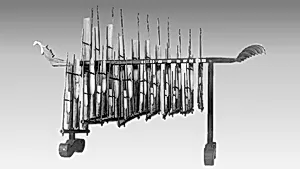
**Anklang: A Javanese Shaken Rattle** Step into the rhythmic world of 19th-century Java with *Anklang*, a striking wooden idiophone classified as a shaken rattle. Crafted in the late 19th century by an unknown Javanese artisan, this instrument stands elegantly on a custom wooden base measuring 188 cm wide by 76.2 cm high. As an idiophone, it produces sound through the vibration of its own material—likely wooden elements filled with pellets or beads that clatter when shaken—making it a vital tool for creating textured, percussive effects in traditional ensembles. In Javanese culture, instruments like the *Anklang* played a key role in communal music-making, accompanying ceremonies, dances, and shadow puppet performances (wayang kulit). Dating to a period of colonial influence under Dutch rule, it reflects the enduring artistry of Java's gamelan traditions, where craftsmanship in wood emphasized both functionality and aesthetic harmony. The instrument's simple yet robust wooden construction highlights local woodworking techniques, blending utility with cultural symbolism. Acquired as part of The Crosby Brown Collection of Musical Instruments in 1889, *Anklang* now resides in the Metropolitan Museum of Art's Department of Musical Instruments. This piece invites visitors to imagine the lively sounds of Javanese gatherings, bridging continents and centuries through its resonant form.