
Anklet
Unknown Artist
A.D. 100–250
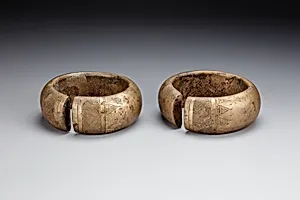
Medium
cupreous alloy
Dimensions
Diam. 11.3 × H. 4.2 cm (4 7/16 × 1 5/8 in.)
Classification
Anklet
Period
Meroitic Period
Department
Egyptian Art
Museum
Metropolitan Museum of Art, New York, NY
Credit
Gift of Oxford University Expedition to Nubia, 1926
Accession Number
26.4.110a
Rights
Public Domain
Art Historical Context
This delicate anklet, crafted from cupreous alloy—a copper-based metal common in ancient jewelry—hails from the Meroitic PeriodA.D. 100–250) in Nubia, the region along the Nile in modern-day Sudan. Measuring 11.3 cm in diameter and 4.2 cm high, it would have encircled the ankle of its wearer, a practical yet elegant form of personal adornment. Donated to the Metropolitan Museum of Art 1926 by the Oxford University Expedition to Nubia, it offers a tangible link to the Kingdom of Meroë, a powerful Nubian civilization that thrived as a trade hub between Egypt, Africa, and the Mediterranean world. The Meroitic Period marked a golden age for Nubia, blending Egyptian influences—like pyramid-building and reverence for gods such as Isis—with distinctly Kushite innovations, including their undeciphered Meroitic script. Anklets like this one symbolized status and beauty, often worn by elite women during ceremonies or daily life. The alloy's durability highlights advanced metalworking techniques, achieved through smelting local ores and possibly importing tin for strength, reflecting Meroë's metallurgical prowess. Today, this unassuming artifact invites us to imagine the rhythmic steps of Meroitic dancers or nobles, echoing the vibrancy of a forgotten empire whose gold and iron trades rivaled Rome's. A quiet treasure in the Egyptian Art department, it underscores Nubia's enduring cultural legacy.