
Anthony Chardon
Medium
Classification
Department
Smithsonian Collection
Museum
Smithsonian American Art Museum
Credit
National Portrait Gallery, Smithsonian Institution; gift of Mr. and Mrs. Paul Mellon
Accession Number
S/NPG.74.39.6.42
Rights
Public Domain
Tags
Art Historical Context
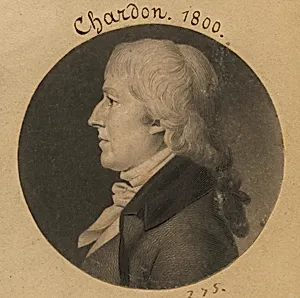
**Anthony Chardon** (1800) is a striking profile portrait print by Charles Balthazar Févret de Saint-Mémin, a French who fled the Revolution and settled in America. Created at the turn of the century, this work captures Anthony Chardon, a prominent manufacturer and merchant, in Saint-Mémin's signature. Housed in the Smithsonian American Art Museum's National Portrait Gallery (gift of Mr. and Mrs. Paul Mellon), it exemplifies 19th-century portraiture that democratized fine art for the emerging American elite. Saint-Mémin revolutionized portrait making with his physiognotrace—a mechanical device that traced subjects' profiles with precision, which he then engraved and hand-colored. This technique produced affordable, lifelike prints that were wildly popular from Philadelphia to New York between 1795 and 1810, blending Enlightenment science with artistry. Unlike painted portraits reserved for the wealthy, these prints made personal commemoration accessible. Chardon's depiction highlights his role as a humanitarian organization founder amid America's industrial dawn, reflecting the era's blend of commerce and civic duty. This intimate artifact offers a window into the lives of early Republic figures, preserving their dignified silhouettes for posterity.