
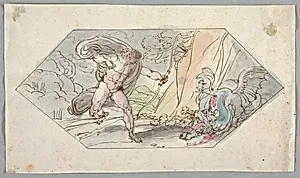
Apollo kills the Python
Classification
figures
Department
Smithsonian Collection
Museum
Smithsonian American Art Museum
Credit
Museum purchase through gift of various donors
Accession Number
1901-39-3239
Rights
Public Domain
About this artwork
Research in Progress
Art Historical Context
Behold the dynamic scene of *Apollo Kills the Python*, a captivating work by Italian artist Felice Giani (175–1823), created between 1796 and1798. This piece, now housed in the Smithsonian American Art Museum through a generous museum purchase, depicts a pivotal moment from Greek mythology: the god Apollo slaying the monstrous serpent Python near Delphi, symbolizing the of order over chaos and the establishment of his prophetic oracle. Giani, a prominent Neoclassical artist active in Italy and France, drew inspiration from ancient Greco-Roman sources, blending elegant figural forms with dramatic narrative energy. Trained in Bologna and influenced by masters like Giambologna, his style emphasized graceful anatomy and mythological themes, often in frescoes or preparatory drawings—though the exact medium here remains under study. Produced during the late Enlightenment era, when renewed fascination with classical antiquity fueled the Neoclassical movement, this artwork reflects Europe's cultural revival of heroic ideals amid revolutionary upheavals. As research continues on this evocative "figures" classification piece from the Smithsonian Collection, it invites visitors to ponder Apollo's eternal victory, a timeless emblem of enlightenment piercing the shadows of myth.