
Apostle Spoon
Unknown Artist
ca. 1490
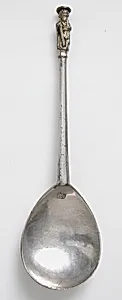
Medium
Silver, partial gilt
Dimensions
Overall: 6 15/16 x 1 15/16 x 11/16 in. (17.6 x 5 x 1.8 cm)
Classification
Metalwork-Silver
Culture
British
Department
The Cloisters
Museum
Metropolitan Museum of Art, New York, NY
Credit
The Cloisters Collection, 1955
Accession Number
55.42.8
Rights
Public Domain
Tags
Art Historical Context
Step back to late 15th-century Britain with this charming *Apostle Spoon*, delicate silver treasure crafted around 1490. Measuring just under 7 inches long, its slender form features a finely modeled figure of an apostle the handle's top, embodying the religious devotion of the medieval elite. Housed in The Cloisters at the Metropolitan Museum of Art as part of the 1955 Cloisters Collection, British metalwork piece exemplifies the exquisite silversmithing of the era. Apostle spoons like this one were luxury items, often produced in sets of twelve (one for each apostle) or thirteen (including Judas or Christ), given as christening gifts to nobility and clergy. They symbolized piety, wealth, and spiritual protection, blending everyday utility with sacred iconography. Surviving examples are rare, making this spoon a poignant survivor of Tudor-era craftsmanship. The medium—silver with partial gilding—highlights masterful techniques: the base metal was hammered, chased, and engraved for detail, then selectively gilded with gold for a luminous effect on key areas like the figure's robes or halo. This contrast of shimmering gold against polished silver not only enhanced beauty but also signified divine light, inviting visitors to appreciate the artisan's skill in a time when such objects bridged the divine and domestic.