
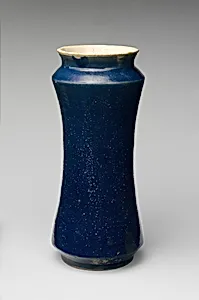
Apothecary Jar
Unknown Artist
ca. 1840
Medium
Tin-glazed earthenware
Dimensions
H. 11 1/4 in. (28.6 cm)
Classification
Apothecary jar
Culture
Mexican
Department
The American Wing
Museum
Metropolitan Museum of Art, New York, NY
Credit
Gift of Mrs. Robert W. de Forest, 1911
Accession Number
17.108.5
Rights
Public Domain
Art Historical Context
This elegant Apothecary Jar, around 1840 by an unknown Mexican artisan, measures 11¼ inches (28.6 cm) in height and exemplifies everyday functional art from mid-19th-century Mexico Crafted from tin-glazed earthenware—a where a tin oxide glaze is fired over clay to create a smooth, opaque white surface ideal for durability and decoration—the jar was designed for practical use in apothecaries storing medicines, herbs, or compounds. Such vessels were essential in pharmacies, blending utility with the rich ceramic traditions influenced by Spanish colonial methods. The tin-glazing process, rooted in maiolica traditions brought to the Americas, allowed for vibrant, long-lasting finishes that withstood daily handling. In Mexican culture during this era, apothecary wares reflected a growing pharmaceutical trade post-independence, merging European techniques with local craftsmanship. Though simple in form, the jar's survival highlights the artistry in humble objects. Today, this piece resides in The American Wing of The Metropolitan Museum of Art, a gift from Mrs. Robert W. de Forest in 1911. It invites visitors to appreciate how Mexican pottery bridged cultures, offering a tangible glimpse into 19th-century daily life and healing practices.