
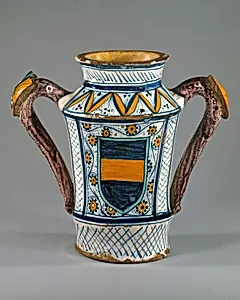
Apothecary jar (albarello)
Unknown Artist
ca. 1480–90
Medium
Maiolica (tin-glazed earthenware)
Dimensions
Height: 22.9 cm. (9 inches)
Classification
Ceramics-Pottery
Culture
Italian, Faenza
Department
Robert Lehman Collection
Museum
Metropolitan Museum of Art, New York, NY
Credit
Robert Lehman Collection, 1975
Accession Number
1975.1.1060
Rights
Public Domain
Tags
Art Historical Context
Step into the vibrant world of Renaissance Italy with this exquisite apothecary jar, known as an *albarello*, crafted in Faenza around 1480–90. Standing at a modest 9 inches (22.9 cm) tall, these cylindrical vessels with their distinctive waisted shape were essential tools in apothecaries—pharmacies of the time—designed for storing and dispensing dried herbs, spices, and medicines. The elegant form allowed them to stack neatly on shelves while displaying labels clearly, blending practicality with artistry in everyday life. Made of maiolica, or tin-glazed earthenware, this jar exemplifies Faenza's mastery of the technique during the late 15th century. The tin glaze created a smooth, white surface ideal for vivid painted decorations, often featuring motifs like the coat of arms seen here, which likely signified a prestigious owner or guild. This innovation elevated humble earthenware to luxurious, colorful ceramics rivaling fine painting, making Faenza a renowned hub for export across Europe. Today, housed in the Metropolitan Museum of Art's Robert Lehman Collection, this anonymous masterpiece highlights the cultural fusion of utility and opulence in Renaissance ceramics. It offers a tangible glimpse into the era's burgeoning interest in science, trade, and personal heraldry, reminding us how even medicine jars were canvases for human ingenuity.