
Arab Warrior
ca. 1817–22
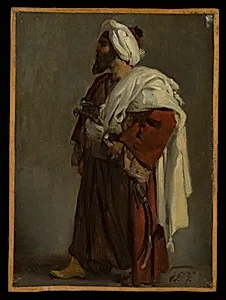
Medium
Oil on canvas
Dimensions
12 1/2 x 8 3/4 in. (31.8 x 22.2 cm)
Classification
Paintings
Department
European Paintings
Museum
Metropolitan Museum of Art, New York, NY
Credit
Gift of Kenneth Jay Lane, 2017
Accession Number
2017.202.12
Rights
Public Domain
Tags
Art Historical Context
Horace Vernet’s *Arab Warrior*, painted around 1817–22, offers a vivid glimpse into early 19th-century European fascination with the Middle East. Executed in oil on canvas, this small yet dynamic work portrays a solitary soldier with careful attention to costume and posture. Vernet, already gaining recognition for his military scenes, brought a sense of immediacy and realism to the figure, capturing both strength and quiet dignity. The painting belongs to the Orientalist tradition, in which Western artists depicted North African and Middle Eastern subjects through a romanticized lens. Created during a period of growing French interest in the region following Napoleon’s campaigns, the work reflects broader cultural curiosity and the era’s taste for exotic themes. Its modest size suggests it may have served as a study or intimate collector’s piece rather than a large public commission. Today housed in the Metropolitan Museum of Art’s European Paintings department, *Arab Warrior* highlights Vernet’s skill at blending historical detail with dramatic presence. The 2017 gift from Kenneth Jay Lane has enriched the museum’s holdings of early Orientalist art, inviting visitors to consider how 19th-century artists shaped Western perceptions of distant cultures.
About the Artist
Horace Vernet · 1789–1863
**Horace Vernet** (full name Émile Jean-Horace Vernet) was a leading French painter of the nineteenth century, renowned for his dynamic battle scenes, portraits, and Orientalist subjects. Born on 30 June 1789 in Paris at the Louvre during the French Revolution, he came from a distinguished artistic dynasty. He was the son of the equestrian and military painter Carle Vernet and the grandson of the ...