Ctrl K
1789–1863
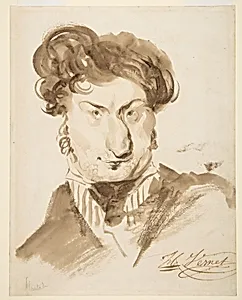
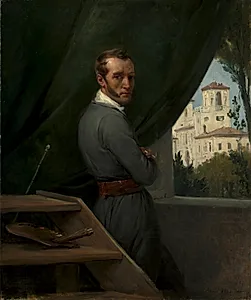
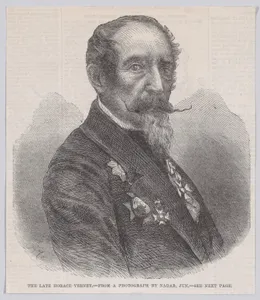
**Horace Vernet** (full name Émile Jean-Horace Vernet) was a leading French painter of the nineteenth century, renowned for his dynamic battle scenes, portraits, and Orientalist subjects. Born on 30 June 1789 in Paris at the Louvre during the French Revolution, he came from a distinguished artistic dynasty. He was the son of the equestrian and military painter Carle Vernet and the grandson of the celebrated landscape painter Claude-Joseph Vernet.
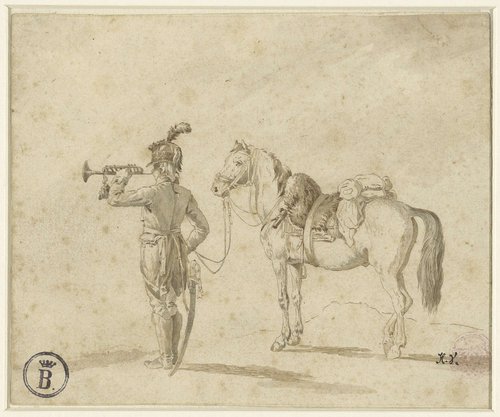
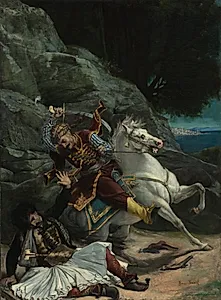
Vernet trained under his father and quickly rejected the idealized Classicism of the academic tradition in favor of more direct, contemporary subjects. He began exhibiting early, including *Taking of an Entrenched Camp* at age twenty, and gained acclaim for realistic portrayals of French soldiers such as *The Dog of the Regiment Wounded* (1819) and *The Wounded Trumpeter* (1819). During the Bourbon Restoration, he received major commissions from the future King Louis-Philippe, producing the celebrated Four Battles series: *The Battle of Jemappes* (1821), *The Battle of Montmirail* (1822), *The Battle of Hanau* (1824), and *The Battle of Valmy* (1826). Appointed director of the French Academy in Rome from 1829 to 1835, he continued to paint with remarkable speed and historical accuracy.
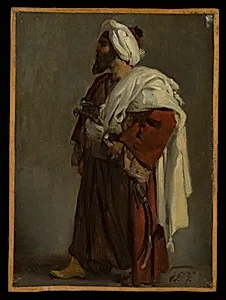
In later decades Vernet became a favored artist of both Louis-Philippe and Napoleon III. He decorated the Constantine Room at Versailles with scenes celebrating French colonization in Algeria, including *The Capture of the Smala* and *The Capture of Constantine*. He accompanied the army during the Crimean War, producing works such as *The Battle of the Alma* (1856) and *The Taking of the Malakoff Redoubt* (1858). Vernet also explored early photography, capturing some of the first known images in Malta and using daguerreotypes from Egypt as references for his paintings.
Vernet died in Paris on 17 January 1863, leaving a vast legacy as one of the most prolific and honored French painters of his era. His commitment to historical truth and vivid military subjects influenced later generations, while his family’s artistic lineage and his own extensive output—encompassing over a hundred known works in major collections—cement his place in art history. Literary nods, such as in Arthur Conan Doyle’s Sherlock Holmes stories, further attest to his enduring cultural resonance.