
Arabesque Design
Medium
Classification
Department
Smithsonian Collection
Museum
Smithsonian American Art Museum
Credit
Purchased for the Museum by the Advisory Council
Accession Number
1921-6-228-9
Rights
Public Domain
About this artwork
Research in Progress
Art Historical Context
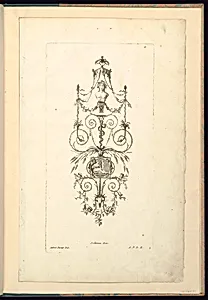
Created in 1788 by French artist Aubert Henri Joseph A. Parent (1753–1835), this print titled *Arabesque Design* captures the refined ornamental style of late 18th-century Europe. Produced just before the French Revolution, it reflects a moment when decorative arts flourished through intricate patterns meant to adorn interiors, furniture, and architectural details. As a print, the work highlights the medium’s power to share elegant designs widely among craftsmen and patrons. Arabesque motifs typically feature flowing, interlacing lines inspired by nature—vines, leaves, and scrolling forms—that create a sense of graceful movement and harmony. Such patterns were essential to the period’s decorative vocabulary, blending beauty with practical application. Now in the Smithsonian American Art Museum collection (purchased by the Advisory Council), this piece invites visitors to appreciate the artistry of ornamental design from a pivotal era in French history.