
Arabesque Designs
Classification
Department
Smithsonian Collection
Museum
Smithsonian American Art Museum
Credit
Purchased for the Museum by the Advisory Council
Accession Number
1921-6-335-8
Rights
Public Domain
About this artwork
Research in Progress
Art Historical Context
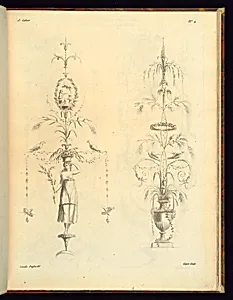
Dating to 1788, *Arabesque Designs* is a print by the French artist Étienne de Lavallée, who was born in 1735 and died in 1802. This work emerges from a vibrant period in French history, just years before the Revolution, when decorative arts reached new heights of sophistication and were central to the cultural identity of the elite. Arabesque designs themselves have a rich history, originating in Islamic art and later embraced in Europe during the Renaissance. By the 18th century, they had become a hallmark of French ornamental style, featuring graceful, curving lines, acanthus leaves, and fanciful figures that created a sense of movement and harmony. As a print, this artwork would have played a crucial role in spreading these motifs far and wide, enabling craftsmen throughout Europe to incorporate similar patterns into architecture, textiles, and furnishings. Now part of the Smithsonian American Art Museum's collection, purchased for the institution by its Advisory Council, *Arabesque Designs* offers museum visitors a window into the world of 18th-century design and the enduring appeal of intricate, nature-inspired decoration.