
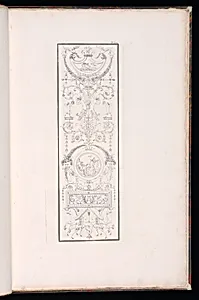
Arabesque Ornament Design
Classification
Department
Smithsonian Collection
Museum
Smithsonian American Art Museum
Credit
Purchased for the Museum by the Advisory Council
Accession Number
1921-6-372-19
Rights
Public Domain
About this artwork
Research in Progress
Art Historical Context
**Arabesque Ornament Design** Charles Normand (French, 1765–1840) dates to 1787–95, a vibrant period in late 18th-century France bridging the Enlightenment and the French Revolution. Normand, a skilled engraver and designer, captured the elegance of arabesque patterns—intricate, flowing motifs inspired by nature and ancient decorative traditions. These designs, often seen in architecture and furnishings, reflect the era's fascination with ornamental harmony amid social upheaval. As a print from the Smithsonian American Art Museum's collection, purchased by the Advisory Council, this work exemplifies the medium's role in disseminating artistic ideas. Prints allowed designers, architects, and artisans to study and replicate sophisticated patterns affordably, influencing European decorative arts. Though the exact medium remains under research, its classification highlights Normand's contribution to pattern books that shaped interiors and objects. Visitors will appreciate how this delicate arabesque embodies timeless beauty, blending French ingenuity with universal decorative appeal. Currently marked "Research in Progress," it invites ongoing discovery into Normand's legacy. (178 words)