
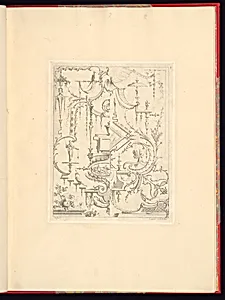
Arabesque Ornament Designs
Classification
Department
Smithsonian Collection
Museum
Smithsonian American Art Museum
Credit
Purchased for the Museum by the Advisory Council
Accession Number
1921-6-421-5
Rights
Public Domain
About this artwork
Research in Progress
Art Historical Context
Claude Gillot, a pioneering French artist (1673–1722) influential teacher to Antoine Watteau created these *Arabesque Ornament Designs* as intricate patterns blending floral motifs, fantastical creatures, and scrolling vines. Published posthumously between 1749 and 1761, this print reflects the enduring popularity of Gillot's decorative work, which bridged Baroque exuberance and the emerging Rococo style.esques, with their rhythmic, interlacing forms inspired by Islamic art and Renaissance grotesques, were staples in 18th-century European interiors, furniture, and book illustrations, symbolizing nature's boundless creativity. As a print from the Smithsonian American Art Museum's collection—purchased by the Advisory Council—this piece highlights the technical mastery of engraving, allowing Gillot's whimsical designs to be widely disseminated. Though the exact medium remains under research, such prints were vital for disseminating ornamental ideas to artisans across Europe. Gillot's playful yet refined arabesques influenced generations, offering a window into the opulent decorative arts of the Ancien Régime, where fantasy met elegance in everyday luxury.