
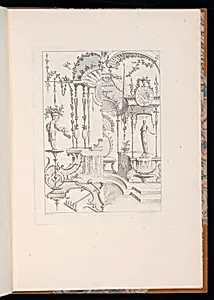
Arabesque Ornament Designs
Medium
Classification
Department
Smithsonian Collection
Museum
Smithsonian American Art Museum
Credit
Purchased for the Museum by the Advisory Council
Accession Number
1921-6-422-9
Rights
Public Domain
About this artwork
Research in Progress
Art Historical Context
Claude Gillot (1673–1722), a pioneering French artist and engraver, created *Arabesque Ornament Designs a set of intricate prints posthumously published between 1749 and 1761. Though Gillot passed away decades earlier, his innovative designs were revived during the height of the Rococo era reflecting the period's fascination with elegant, flowing ornamentation. Housed in the Smithsonian American Art Museum's Print Department, this work was acquired through the Advisory Council's purchase, underscoring its value in American collections. Arabesques, with their swirling vines, foliage, and fantastical motifs, were a hallmark of decorative arts in 18th-century France, bridging Baroque exuberance and Rococo playfulness. Gillot, mentor to Antoine Watteau, excelled in these patterns, using prints to disseminate ornamental ideas for architecture, furniture, and textiles. The print medium was revolutionary here—affordable and reproducible, it allowed widespread influence on craftsmen across Europe, democratizing high design. Today, these designs captivate with their rhythmic elegance, offering a window into how Gillot's whimsical style shaped tastes long after his time. A true gem for lovers of ornamental history! (178 words)