
Architectural Fitting (Gong)
Eastern Zhou dynasty, Spring and Autumn period (770–481 B.C.), 7th century B.C.
Medium
Bronze
Classification
bronze
Department
Arts of Asia
Museum
Art Institute of Chicago
Accession Number
228596
Rights
Public Domain
About this artwork
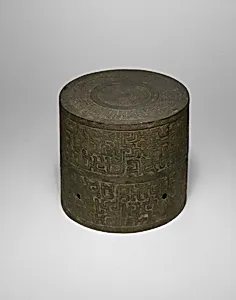
This is one of sixteen hollow bronze fittings in the museum's collection that together comprise rectangular, L-shaped, and cylindrical pieces. In 1973, fittings of similar shape and design were excavated from the site of a palace of the 7th century B.C. in modern-day Fengxiang, Shaanxi province in north China. Most show tightly interlaced surface patterns like those cast in this piece. Archaeologists have conjectured that these fittings, some of which preserve traces of wood, originally served a...
Art Historical Context
This exquisite bronze Architectural Fitting, known as a *gong*, hails from China's Eastern Zhou dynasty during the Spring and Autumn period (770–481 B.C.), specifically the 7th century B.C. Crafted by an unknown artisan, it exemplifies the masterful metalwork of this transformative era, when feudal states vied for supremacy and cultural patronage flourished. Such fittings adorned elite buildings, securing roof beams or eaves while serving as symbols of power and protection against malevolent spirits. Cast in bronze using the sophisticated piece-mold technique—prevalent in ancient China—this artifact reveals the era's advanced metallurgy. Intricate motifs, often featuring mythical beasts or geometric patterns, were meticulously incised or inlaid, showcasing both technical prowess and aesthetic refinement. Bronzes like this were not mere functional objects but status symbols, bridging the ritual bronzeware tradition with architectural innovation. Today, housed in the Art Institute of Chicago's Arts of Asia department, this *gong* offers a window into a dynamic period that birthed philosophical giants like Confucius. Its enduring patina whispers tales of ancient grandeur, inviting us to marvel at how everyday architecture embodied cosmic harmony and imperial might.
About the Artist
Unknown
The artist designated as "Unknown" in our virtual museum's collection exemplifies a poignant chapter in art history: creators whose identities have faded into obscurity despite the enduring power of their work. With only one known artwork attributed to them in our holdings, this figure represents countless anonymous hands that shaped visual culture across centuries. Museums worldwide, including th...